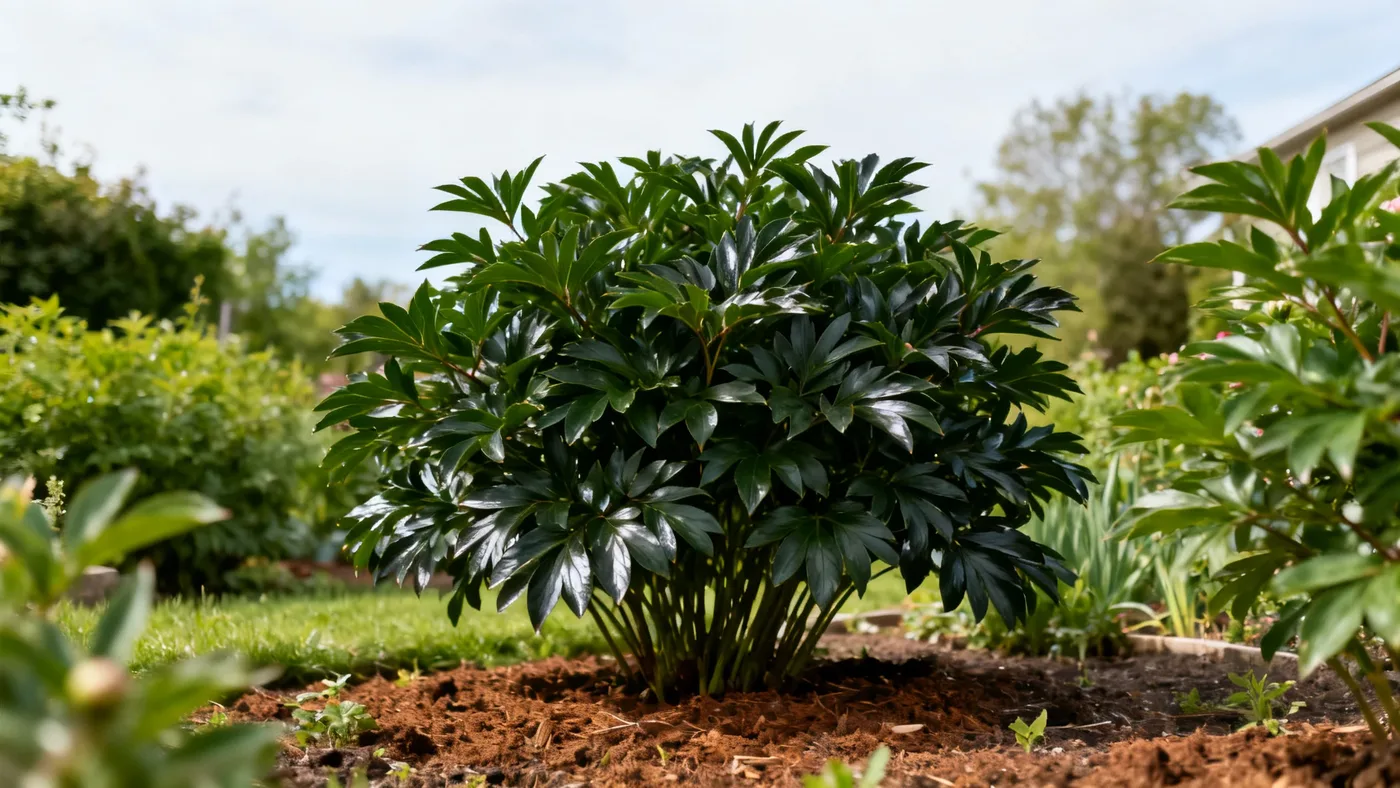
Fertilizing Karl Rosenfield Peony: What, When and How Much
Karl Rosenfield Peony is a vigorous, long-lived perennial that rewards good soil and smart feeding practices with reliable deep-red blooms year after year. Unlike many ornamental plants, peonies don't demand heavy fertilization, but getting the timing and type right makes a measurable difference in flower size, stem strength, and overall plant vigor. This guide covers exactly what your Karl Rosenfield needs and when to feed it for best results.
Why the Right Fertilizer Matters for Karl Rosenfield Peonies
The common mistake is feeding peonies too much nitrogen. Nitrogen promotes leafy growth at the expense of blooms, and in Karl Rosenfield, that means more foliage and fewer of the full, crimson flowers you planted it for. A properly fertilized Karl Rosenfield focuses its energy on root development, stem strength, and flower production rather than excessive leaf growth.
Your soil chemistry also plays a role. Karl Rosenfield Peonies perform best in soil with a pH between 6.5 and 7.0 (slightly acidic to neutral). If your soil is already fertile loam with good organic matter, light feeding is all you need. If your soil is poor or sandy, modest amendments help the plant reach its potential over its 3 to 4 growing seasons to full maturity.
Understanding Fertilizer Types and NPK Ratios
Every fertilizer label shows three numbers: nitrogen (N), phosphorus (P), and potassium (K). For peonies, you want low nitrogen and higher phosphorus. Phosphorus encourages root development and flower production. Potassium builds cell strength and overall plant resilience.
Best fertilizer choices for peonies include:
- Low-nitrogen, phosphorus-rich formulas (such as 5-10-5 or 5-15-10)
- Balanced fertilizers (10-10-10 or 8-8-8) applied sparingly
- Bone meal or rock phosphate for organic phosphorus without excess nitrogen
- Well-aged compost or rotted manure as a gentle base feeder
Avoid high-nitrogen lawn fertilizers (like 24-0-0) and "bloom booster" products marketed for annuals. They are designed for different plants and can tip your peony toward leaf production over flowers.
Step-by-Step Fertilizing Instructions
Step 1: Choose Your Timing and Product
The ideal time to fertilize Karl Rosenfield Peony is in early spring as shoots emerge from the ground. This is typically late March or early April in Zones 3 and 4, and a few weeks earlier in warmer zones within the 3 to 8 range. At this point, the plant is beginning active growth and can use the nutrient boost to fuel stem and bud development.
Select a low-nitrogen, phosphorus-rich granular fertilizer or aged compost. Granular products are easier to apply evenly and reduce the risk of fertilizer burn.
Step 2: Clear the Base of the Plant
Before applying fertilizer, brush away any mulch or debris from the crown (where the shoots emerge). This ensures the nutrients reach the root zone and prevents mulch from trapping moisture against the plant and creating conditions for fungal issues like Botrytis blight.
Step 3: Apply the Fertilizer
Sprinkle a light application of your chosen fertilizer in a ring around the base of the plant, about 6 inches away from the shoots. A light hand is key: aim for roughly 1/2 cup to 1 cup of granular fertilizer per established plant, depending on product strength. If using bone meal or rock phosphate, follow package directions, which typically call for 1 to 2 tablespoons per plant.
For a newly planted Karl Rosenfield in its first year, use half this amount. The plant is still settling in and excess nutrients can stress young roots.
Step 4: Water Thoroughly
Water the plant well after applying fertilizer. This dissolves granular nutrients and carries them into the root zone where they are available to the plant. Provide about 1 inch of water, either by rainfall or irrigation, to complete the feeding cycle.
Step 5: Repeat Once More Mid-Season (Optional)
Many gardeners apply a second, lighter feeding around early May, just before or as buds are forming. This second application is optional but can support larger blooms on established plants. Use half the amount of your spring application. Do not fertilize after flowering; late-season feeding can reduce winter hardiness and weaken dormancy.
Seasonal Feeding Schedule for Karl Rosenfield Peonies
Karl Rosenfield Peonies respond to a simple yearly rhythm. Here's what a full calendar looks like:
| Season | Task | Details |
|---|---|---|
| Early Spring (as shoots emerge) | Primary feeding | Apply low-nitrogen, phosphorus-rich fertilizer; water in thoroughly |
| Late Spring (May, optional) | Secondary feeding | Light application if desired, before or during bud formation |
| Summer through Early Fall | No feeding | Continue regular watering (about 1 in per week during growth); no fertilizer |
| Late Fall (after hard frost) | Cut foliage to ground | No feeding needed; foliage yellows and dies back naturally |
| Winter | Rest period | Plant is dormant; no feeding or watering needed |
Tips for Fertilizing Success
Watch for visual signs. A well-fed Karl Rosenfield shows deep green, glossy foliage without excessive growth. If stems are very thick and foliage is overwhelming the flowers, reduce fertilizer the next year. If blooms are small or sparse despite good sunlight (6 or more hours daily) and proper watering, your plant may benefit from the second mid-season feeding.
Account for your soil. If you amended your planting area with compost or aged manure when planting, your soil is already relatively fertile. In that case, a single early-spring light feeding may be all you need. If you planted in poor, sandy, or clay-heavy soil, the mid-season boost helps more. You can also have your soil tested through your local extension service to determine its nutrient profile before deciding on a feeding plan.
Mulch wisely. A 2-inch layer of aged compost or bark mulch around the plant (but not touching the crown) helps retain soil moisture and adds slow-release nutrients over time. This acts as a gentle form of feeding and reduces your need for additional fertilizer applications.
Don't over-feed old, established clumps. Peonies that have been in place for 5, 10, or 20 years are often thriving in stable soil. Too much fertilizer on an established plant can trigger excessive stem growth and flopping in the heavy double blooms. Many mature Karl Rosenfield Peonies need little more than annual compost replenishment or a single early-spring light feeding.
Common Mistakes to Avoid
Using high-nitrogen fertilizers. Lawn fertilizers and vegetable garden blends are too high in nitrogen for peonies. They push leaf growth and reduce flowering.
Fertilizing after bloom. Late-season feeding disrupts the plant's transition to dormancy and can weaken winter hardiness. Stop fertilizing after flowers fade.
Piling fertilizer against the crown. Granular fertilizer or compost pressed against the emerging shoots can cause rot and fungal issues. Always maintain a 6-inch distance from the plant base.
Fertilizing newly planted divisions. A newly transplanted Karl Rosenfield needs time to establish roots before heavy feeding. Light applications only in year one.
Ignoring drainage. Karl Rosenfield Peonies are intolerant of soggy soil. Poor drainage is often the real issue limiting growth, not lack of nutrients. If your site stays wet, amend with compost or perlite and improve surface drainage before fertilizing.
Expected Results and Timeline
A newly planted Karl Rosenfield Peony may bloom lightly in its first year but typically takes 2 to 3 years to reach full flowering potential. Consistent, appropriate fertilization during this establishment phase supports faster maturation. You may expect to see larger, fuller blooms by the third season with a regular feeding regimen.
On established plants (3 years and older), good feeding practices may help produce larger flowers and stronger stems capable of supporting the heavy double blooms without flopping. Some gardeners report a 10 to 20 percent increase in bloom size and stem thickness when they switch from no feeding to a light, consistent schedule using the right formula.
Results vary by soil quality, sunlight, and watering practices. A well-fed plant in poor light will still underperform. Conversely, a plant with excellent sun (6 or more hours daily), consistent moisture, and proper drainage will respond more visibly to fertilizer than one struggling with a shaded or boggy site. For more details on overall care, see our complete care guide for planting and blooming.
Troubleshooting Bloom Failure
If your Karl Rosenfield Peony is not blooming despite fertilizer applications, the issue is usually not nutrients. The most common culprit is planting depth: the eyes (buds) should be no more than 1 to 2 inches below the soil surface. If planted too deep, the plant may take years to produce blooms. The second common issue is insufficient sunlight; Karl Rosenfield needs full sun (6 or more hours daily) for reliable flowering, though it tolerates light afternoon shade in hot southern climates. For in-depth troubleshooting, read our guide on why peonies don't bloom.
Quick Reference: Fertilizing Checklist
| Item | Details |
|---|---|
| Best Time to Start | Early spring as shoots emerge (late March to early April in Zones 3-4) |
| Fertilizer Type | Low-nitrogen, phosphorus-rich (5-10-5, 5-15-10) or balanced (10-10-10) |
| Amount per Plant | Established: 1/2 to 1 cup granular; First-year: half this amount |
| Application Method | Sprinkle in a ring 6 inches from crown, water thoroughly |
| Second Feeding (Optional) | Early May, half the spring amount, before or during bud formation |
| Frequency | Once or twice yearly in spring; never after flowering |
| Avoid | High-nitrogen formulas, fertilizing against the crown, late-season feeding, soggy soil |
| Expected Timeline | Full-sized blooms by year 2-3 of consistent feeding on new plants |