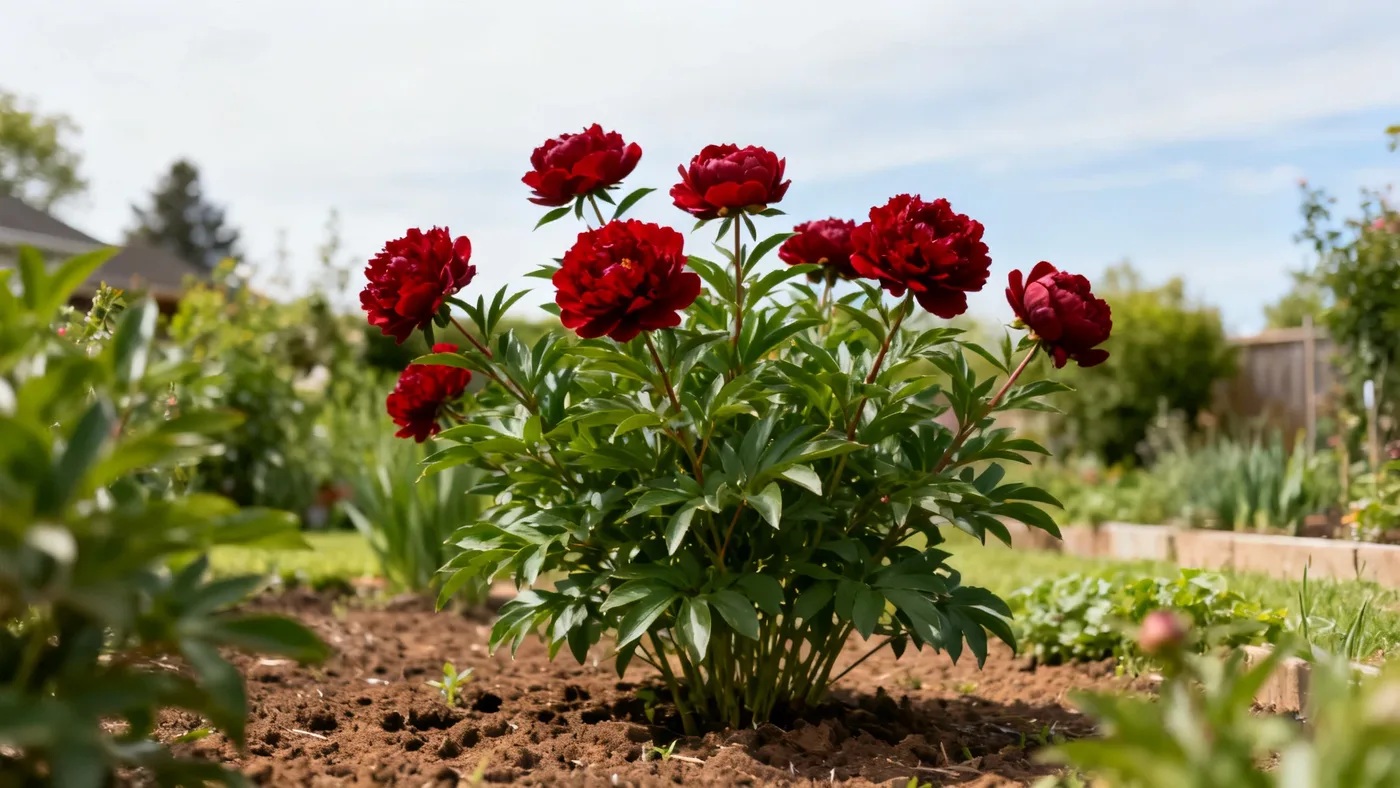
Why Is My Karl Rosenfield Peony Not Blooming?
A mature Karl Rosenfield Peony in the right conditions delivers reliable crimson blooms year after year. But if your plant is producing lush foliage while the flowers stay stubbornly absent, something specific is usually to blame. The good news: non-blooming peonies almost always respond once you identify and fix the root cause. This guide walks you through the most common culprits and how to correct them.
The Most Common Reason: Planting Crown Too Deep
This is the single biggest reason Karl Rosenfield Peonies fail to bloom, and it's entirely preventable. The crown is where the eyes (growth buds) emerge from the root system. These eyes must sit at the correct depth, or the plant will spend all its energy on foliage and never set flower buds.
Why Depth Matters
When the crown is buried too deep, the plant struggles to channel energy upward into flowers. Instead, it focuses on survival and leaf production. A Karl Rosenfield that's been planted correctly will begin flowering reliably within 2 to 3 growing seasons, but one planted too deep may never bloom at all.
The Right Depth: 1 to 2 Inches Below Soil Surface
Plant the crown so that the eyes sit no more than 1 to 2 inches below the soil surface. In warmer zones (7-8), you can plant slightly shallower. In colder zones (3-4), a full 2 inches is fine. Any deeper than that, and you're setting yourself up for a non-blooming plant.
How to Check Your Current Plant
If your peony is already in the ground, dig carefully around the base to expose the crown. You should be able to see where the eyes emerge. If they're buried 3 inches or deeper, the plant needs to be dug up, repositioned, and replanted. Do this work in fall (September through October) when the plant is dormant. It's disruptive, but it's the fastest way to restore blooming.
If You're Replanting
Dig a hole wide enough to accommodate the root spread (peonies typically spread 24 to 36 inches at maturity). Position the crown so the topmost eyes are just 1 to 2 inches below the final soil level. Backfill with fertile, well-drained loam, and water gently. Mark the spot so you don't accidentally dig it up later.
Check Your Light Exposure
Karl Rosenfield Peonies need full sun: at least 6 hours of direct sunlight per day. Without it, flowers won't form reliably, even on a healthy plant.
If your plant is in light afternoon shade in a hot climate (zones 7-8), flowering may be reduced but not eliminated. However, if it's receiving fewer than 6 hours of sun, this is likely your problem. Morning sun is better than afternoon, but any 6 hours of direct light will support blooming.
Measure sunlight during the growing season, not winter. Watch the plant's shadow at 9 a.m., noon, and 3 p.m. to confirm it gets the full 6 hours. Shade from deciduous trees or nearby structures that wasn't there a few years ago can shift a plant from sunlit to shaded without you realizing it.
If shading is the issue, you have two options: prune back overhanging branches to restore light, or dig and move the plant to a sunnier spot in fall. Moving is easier than pruning if you have the space.
Assess Your Soil and Watering Practices
Karl Rosenfield Peonies are intolerant of soggy soil. Waterlogged roots rot and won't support flowering.
Soil Drainage
The ideal soil is fertile, well-drained loam with a pH of 6.5 to 7.0 (slightly acidic to neutral). If your soil stays wet for hours after rain or watering, drainage is your problem. Peonies grown in clay or heavy loam that holds moisture tend to struggle.
Improve drainage by amending the planting area with compost or aged bark. Mix 2 to 3 inches of organic matter into the top 8 to 10 inches of soil before planting. If the plant is already established, work compost gently around the base each spring. This doesn't instantly fix clay, but it improves drainage over time.
Watering
During active growth, Karl Rosenfield Peonies need about 1 inch of water per week. This includes rainfall. Once the plant is established (usually after year two), it becomes more drought-tolerant and needs less frequent watering. The key is consistency: weekly soaking is better than daily sprinkles.
Water at the base of the plant, not overhead. Wet foliage invites fungal problems and doesn't help the roots. Let the soil dry slightly between waterings. If it's been raining regularly, skip supplemental watering.
If you're in a particularly wet climate or have naturally soggy soil, consider raised beds or mounded planting areas. Elevating the crown even 6 inches above grade can prevent waterlogging.
Evaluate Your Fertilizing Program
Too much nitrogen is a common mistake. Excess nitrogen pushes leafy growth at the expense of flowers. A Karl Rosenfield that's all foliage and no blooms often got too much nitrogen.
The Right Approach
Apply a light feeding of low-nitrogen, phosphorus-rich or balanced fertilizer in early spring as shoots emerge. That's it. One application per year is plenty for an established plant. Look for a fertilizer ratio like 5-10-10 or a balanced 10-10-10.
Avoid high-nitrogen products (like lawn fertilizer), and never overfertilize. A plant that's in decent soil doesn't need much feeding at all. If you've been fertilizing monthly or applying lawn treatments near the peony, dial it back or stop entirely for a season and see if blooming improves.
Rule Out Disease
Botrytis blight and other fungal diseases can prevent flowering, though usually the plant shows other symptoms first (spotted or blackened foliage, wilted shoots).
Karl Rosenfield is susceptible to Botrytis blight, especially in cool, wet spring weather. Powdery mildew and leaf spot can also occur. If you see brown spots on leaves, a grayish coating, or shoots that wilt despite adequate water, disease is at play.
Prevention Steps
Cut foliage back to a few inches above ground after it yellows and dies back with hard frost in late fall. Remove and discard the debris, don't compost it. Clear the area of any plant material on the ground each spring before new growth emerges. Good air circulation helps prevent fungal problems, so don't crowd peonies too closely with other plants.
If disease does appear, remove affected foliage immediately and improve air flow. In severe cases, a sulfur-based fungicide applied in early spring before buds open may help, but prevention through clean removal of old foliage is far more effective.
Be Patient: Your Plant May Simply Be Young
Karl Rosenfield Peonies can bloom lightly in their first year after planting, but they typically take 2 to 3 years to reach full flowering potential. Young plants put energy into establishing a strong root system before committing to heavy flowering.
If your plant was planted only last year or the year before, and it's in a good location with correct crown depth, the answer might simply be time. Keep the plant healthy, weed-free, and well-watered. Blooms will come.
Similarly, a young plant that was moved or divided needs 2 to 3 seasons to recover and resume normal flowering. This is normal. Avoid the temptation to overfertilize or fuss with a young plant. Let it settle.
Quick Reference Checklist
| Issue | What to Check | Action |
|---|---|---|
| Crown Depth | Eyes buried more than 1 to 2 inches below soil | Dig in fall and reposition so eyes sit 1 to 2 in below surface |
| Sunlight | Plant receives fewer than 6 hours direct sun | Prune shade sources or move plant to sunnier location in fall |
| Soil Drainage | Soil stays wet more than 24 hours after rain | Amend with compost or raise bed height 4 to 6 inches |
| Watering Frequency | Plant watered daily or soil never dries between waterings | Water 1 in per week at base only; let soil dry between waterings |
| Fertilizer | Applied high-nitrogen or fertilized more than once per year | Skip fertilizing for one season; use balanced or phosphorus-rich formula if resuming |
| Fungal Disease | Spotted foliage, grayish coating, or wilted shoots | Remove affected leaves; cut back foliage in fall; improve air circulation |
| Plant Age | Planted or divided fewer than 2 to 3 years ago | Wait; continue basic care (water, sun, drainage). Blooming will resume |
For a comprehensive overview of Karl Rosenfield Peony care from planting onward, consult our complete care guide. Most non-blooming plants respond within one growing season once the underlying cause is addressed. Start with crown depth, since that's the most common culprit, and work through the other factors if blooming still doesn't return.