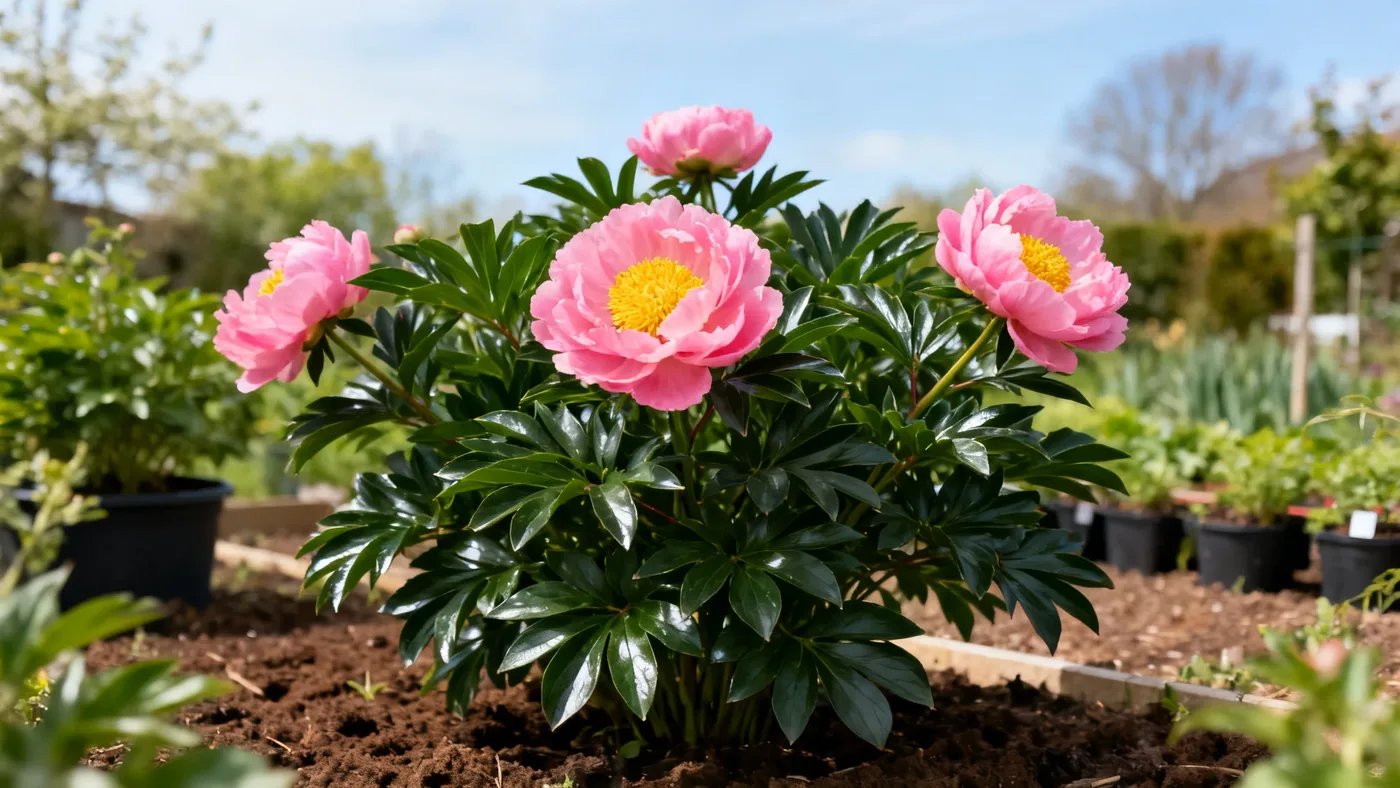
Sun and Light Requirements for Karl Rosenfield Peony
Getting sunlight right is the difference between a peony that flowers heavily and one that sets buds without opening them. Karl Rosenfield Peony is a reliable deep-red double peony that needs steady, consistent light to perform. This guide shows you how to evaluate your garden's light and position your plant where it will thrive.
Understanding Karl Rosenfield Peony's Sun Requirements
Karl Rosenfield Peony performs best in full sun, defined as 6 or more hours of direct sunlight each day. This cultivar is not shade-tolerant in the way that some perennials are. Insufficient light leads to fewer flowers and weaker stems that flop under the weight of the blooms.
The plant does tolerate light afternoon shade in hot southern climates (Zones 7 and 8), where the intensity of midday sun can stress the plant. Even in these warmer zones, though, flowering is reduced compared to full-sun placement. If you're in Zones 3 to 6, prioritize morning sun and afternoon sun whenever possible.
What You Need to Assess Your Garden's Light
Before planting, spend a day or two observing your garden. You don't need special equipment, but a notebook and a simple hourly record will guide your decision.
- Observation notebook: Record when shade falls on your candidate planting site, and for how long.
- A watch or timer: Clock the actual hours of direct sun between 9 a.m. and 5 p.m., the critical growing window.
- Awareness of seasonal changes: Deciduous trees that provide light shade in summer may be bare and allow full sun in spring, when peonies are emerging and setting buds.
Steps to Evaluate Your Garden and Choose the Right Spot
Step 1: Identify candidate locations in your garden
Walk your property and list three to five open spots that get strong midday light. Avoid areas that stay shadowed in the morning or spend most of the afternoon under trees or buildings. Karl Rosenfield Peony's glossy dark green foliage will tell you it's healthy in the shade, but the plant is investing its energy in leaves, not blooms.
Step 2: Observe direct sun from 9 a.m. to 3 p.m. for one full day
Visit each candidate spot every hour and note whether it's in direct sun or dappled/blocked shade. Count the consecutive hours of direct sunlight. Aim for 6 hours as a minimum. Eight or more hours is ideal. Morning sun is preferable to afternoon sun if you must choose, since it dries dew and reduces disease pressure.
Step 3: Check for afternoon shade in hot climates
If you're in USDA Zone 7 or 8, note which spots receive light afternoon shade (roughly 2 p.m. to 4 p.m.) from a tree canopy or building. This is a bonus in extreme heat, but only if the plant still receives 6 or more total sun hours. Do not sacrifice the 6-hour minimum for afternoon shade.
Step 4: Account for seasonal light changes
In spring (April and May in most zones), the sun angle is higher and tree canopies are not yet full. A spot that feels shaded in June may be quite open in May, when your peony is setting flower buds. Walk your candidate spot on a clear day in late April or early May and reassess. A planting spot that gets 7 hours of sun in May but only 5 in July will still perform reasonably, because the critical bud-set window is spring.
Step 5: Mark your final spot and clear any competing growth
Once you've chosen your location, remove grass, weeds, and low-growing groundcover from a 3-4 foot diameter circle. Karl Rosenfield Peony reaches 28 to 36 inches tall and 24 to 36 inches wide at maturity over 3 to 4 growing seasons, so give it room. Clear shading is more important than soil prep at this stage. Do not plant under trees or within the dripline of nearby shrubs.
Special Considerations for Shade Tolerance
Karl Rosenfield Peony is not a plant that adapts well to partial shade. If your garden is mostly shaded, this is not the right cultivar for that location. Some peony species (such as Paeonia obovata or the Woodland Group hybrids) handle dappled shade better, but Karl Rosenfield Peony will not reward you with reliable blooms if light is a limiting factor.
Light afternoon shade in Zones 7 to 8 is a safety measure against heat stress, not a long-term solution for low-light gardens. If you're planting in Zone 7 or 8 and have a spot with 6 to 7 hours of sun plus afternoon shade, that's an acceptable compromise. A spot with fewer than 6 hours of sun is not suitable, regardless of your zone.
Also consider reflected light. Pavers, light-colored mulch, and south-facing walls bounce heat and light, which can help. East-facing slopes also tend to warm earlier in spring, encouraging earlier bud break.
Tips and Common Mistakes to Avoid
Mistake 1: Planting under deciduous trees. Many gardeners assume that because a tree leafs out late and loses its leaves early, a peony planted beneath it will get enough spring sun. This rarely works. The root competition from the tree and the lingering light shade in May reduce bloom set. Plant peonies in open beds or along edges where the tree canopy does not reach.
Mistake 2: Underestimating how much light the plant actually gets. "Partial shade" is not 6 hours; it's usually 3 to 4 hours. "Dappled shade" is even less. If you count sunny hours and consistently come up short of 6, trust the count and choose a sunnier spot or a different plant.
Mistake 3: Relying on midday sun in very hot zones. In Arizona, southern California, or southern Texas, 6 hours of intense midday sun without afternoon shade can stress the plant and bleach the red color of the blooms. In these regions (outside the peony's ideal range, Zones 3 to 6), afternoon shade from a tree is helpful. However, this is still a marginal growing zone, and other factors (soil, water, humidity) matter more than light.
Tip 1: Position the plant where you see it daily. Peonies bloom for 2 to 3 weeks in late spring and early summer. Site your plant where you pass by regularly so you don't miss the flowers. A full-sun location that's visible from the house is more rewarding than a perfect spot tucked behind the garage.
Tip 2: Don't assume a shaded spot will improve over time. If a location is shaded today, it will be shaded next year and the year after, unless you remove nearby trees or structures. Peonies live for decades once established, so a poor site choice has long-term consequences. Take the time to find the right spot.
Tip 3: Watch for morning dew in humid climates. Morning sun that dries dew helps prevent fungal diseases like Botrytis blight, which can spoil flower buds in cool, wet springs. An east-facing location is ideal. A west-facing spot with afternoon sun is acceptable but carries more disease risk in wet seasons.
Expected Results in Ideal Light Conditions
When Karl Rosenfield Peony receives consistent full sun (6+ hours daily), you can expect:
- Prolific flowering starting in the second or third year after planting, with the plant reaching full flowering potential over 3 to 4 growing seasons.
- Dense, healthy foliage with the deep glossy green typical of the cultivar.
- Strong, upright stems that support the heavy double blooms (plants in marginal light often need staking due to weak, floppy stems).
- Deep, rich red color in the blooms, true to the Karl Rosenfield name.
- Reliable bloom initiation in late spring (May through early June, depending on your zone).
In zones 3 to 6 with proper full-sun placement, established Karl Rosenfield Peonies commonly flower for 50+ years with minimal division or replanting. Light is a foundational requirement, not a bonus factor.
Troubleshooting Low-Light Symptoms
If your Karl Rosenfield Peony is already planted and showing poor bloom, here's what low light looks like:
- Lots of foliage, few or no flowers: Classic sign of insufficient light. The plant is putting energy into leaves instead of buds.
- Buds that form but don't open: Marginal light often allows bud initiation but not full flower development. They may blacken and drop.
- Weak, floppy stems: Not always a light issue, but low light combined with high nitrogen in the soil can cause this.
Your options are to transplant the peony to a sunnier location (fall is best for this, in most zones) or to remove shading obstacles if possible. Removing a low limb from a nearby tree or pruning back tall perennials next to the peony can sometimes bring light hours into the acceptable range. Refer to our Karl Rosenfield Peony care guide for step-by-step transplanting instructions if relocation is needed.
Quick Reference: Sun and Light Checklist
| Requirement | Minimum | Ideal | Notes |
|---|---|---|---|
| Daily direct sunlight | 6 hours | 8+ hours | Full sun from 9 a.m. to 3 p.m. preferred; morning sun better than afternoon |
| Afternoon shade (Zones 7-8 only) | Not needed | 2-3 hours light shade 2-4 p.m. | Reduces heat stress in hot climates; do not sacrifice the 6-hour minimum |
| Seasonal consideration | Full sun in spring (May) | Same as above | Bud set occurs in spring; late-leafing trees are not a sufficient solution |
| Planting distance from trees/shade | At least 3-4 feet clear from dripline | Open bed, not under trees | Root competition and shade from nearby trees reduce bloom |
| Reflected light benefit | Not required | East-facing slope or south-facing wall | Optional; can help in cooler zones (3-5) |