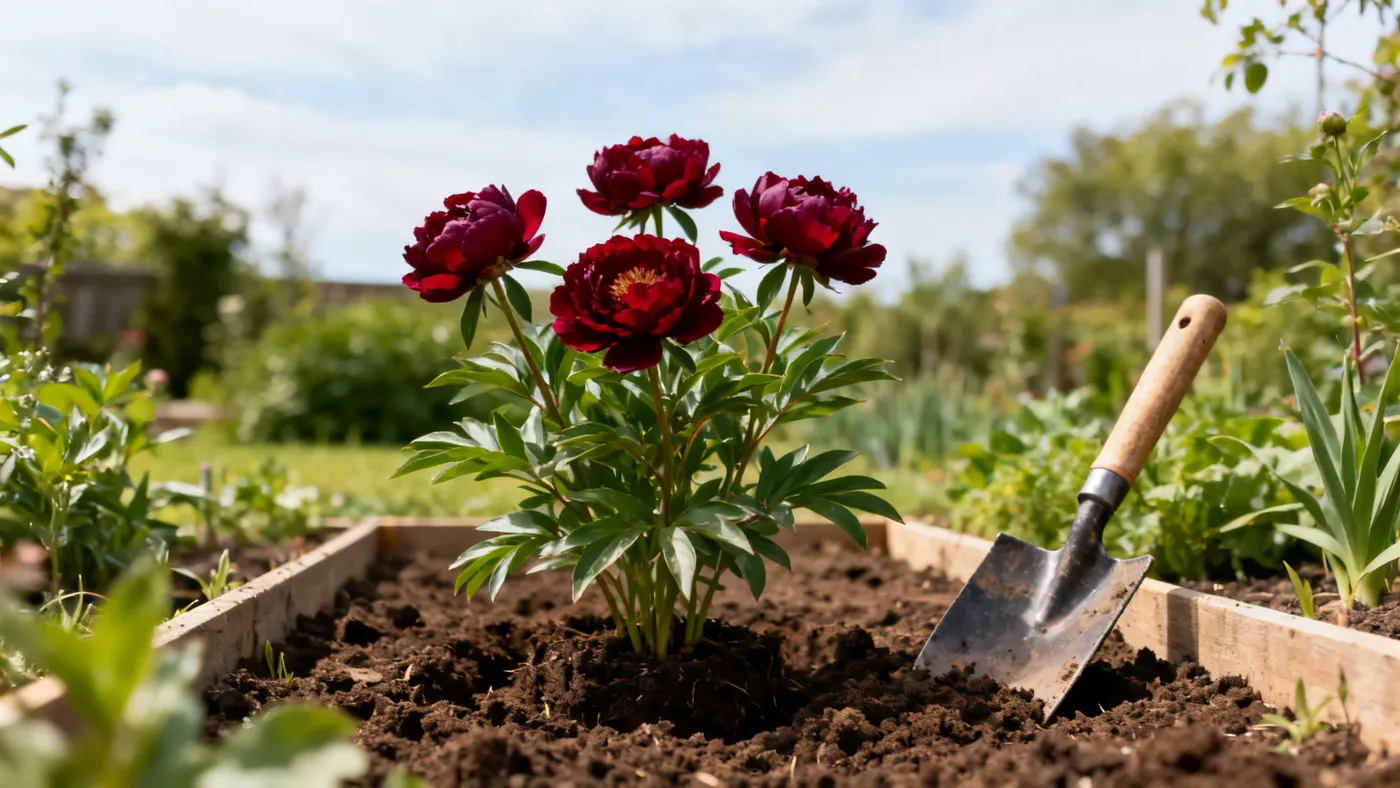
How to Plant Karl Rosenfield Peony for Years of Blooms
Karl Rosenfield Peony is a deep red, double-flowered treasure that blooms reliably every late spring for decades with minimal fuss. If you give it the right start, this herbaceous perennial will reward you with increasingly full, rich crimson clusters year after year. The first bloom often comes lightly in year one, but by year two or three, you'll have substantial flowers. The key is nailing the planting depth and site selection right from the beginning.
When to Plant Karl Rosenfield Peony
Timing matters. Fall is the best season for bare-root divisions, which are the standard form sold by most nurseries. Plant in September through October so the roots establish before winter dormancy. Container plants (usually quart, #1, or #3 containers from a nursery) can go in during spring, but they'll need more watering their first year than a fall-planted bare-root will.
Karl Rosenfield Peony grows in USDA zones 3 through 8. Wherever you are in that range, fall planting gives roots time to settle before the plant pushes new shoots in spring.
Materials You'll Need
- Karl Rosenfield Peony bare-root division or container plant
- Shovel or spade for digging
- Compost or aged manure (optional but helpful)
- Bone meal or a low-nitrogen, phosphorus-rich fertilizer (optional)
- Water source (hose or watering can)
- Garden stakes or peony rings (for support later, optional now)
Preparing Your Planting Site
Karl Rosenfield Peony demands full sun for best blooming, meaning 6 or more hours of direct sunlight daily. In hot southern climates, it tolerates light afternoon shade, but flowering will be reduced. Choose a spot where the plant will not be crowded or shaded as it matures.
Soil is critical. Peonies are intolerant of soggy soil, so your site must drain well. Dig a test hole 12 inches deep and fill it with water. If water drains within 24 hours, you're fine. If it sits, choose a different spot or amend heavily with compost. Karl Rosenfield Peony prefers fertile, well-drained loam with a soil pH of 6.5 to 7.0, which is slightly acidic to neutral. If your soil is heavy clay, work in 3 to 4 inches of compost before planting.
Space plants 3 to 4 feet apart. This seems wide, but Karl Rosenfield reaches 28 to 36 inches tall and equally wide at maturity, and it needs air circulation to prevent disease.
Step-by-Step Planting Instructions
Step 1: Dig the Planting Hole
Dig a hole 12 to 18 inches deep and about 18 inches across, wider than the root system will be. This gives roots room to spread without crowding. Loosen the soil at the bottom of the hole so roots make direct contact with undisturbed earth.
Step 2: Amend the Soil (If Needed)
If your native soil is poor, mix the excavated soil with compost (about 1 part compost to 2 parts native soil) and a small handful of bone meal. Do not use fresh manure, which can rot roots. Aged compost or well-rotted manure is safer. This step is optional if your soil is already loamy and fertile.
Step 3: Create a Cone at the Bottom
Pour a few inches of amended soil into the bottom of the hole and mound it into a small cone. This is where the peony roots will rest, spreading down and outward. The cone prevents air pockets under the crown.
Step 4: Position the Peony Division
Place the bare-root peony on the cone so the roots drape naturally down the sides. If planting a container peony, remove it gently from the pot, loosen the root ball slightly with your fingers, and position it at the same depth it was growing in the container. The critical part comes next.
Step 5: Set the Planting Depth (The Most Important Step)
This is where many home gardeners go wrong. The eyes on a peony division are the small pink or reddish buds on the crown. These eyes must be no more than 1 to 2 inches below the soil surface. If you plant the crown too deep (say, 3 or more inches), the peony may never bloom, even if it grows. Conversely, if the eyes are too high and exposed, the plant may fail in harsh winters. Aim for 1 to 2 inches of soil covering the topmost eyes.
When to plant peonies with the correct depth: that one detail separates years of blooms from years of frustrated waiting. Take your time here.
Step 6: Backfill and Firm the Soil
Return the amended soil to the hole, filling around the roots gradually. As you backfill, gently firm the soil with your hand so there are no air pockets. Do not stomp hard; firm pressure is enough. Leave the soil level or slightly mounded at the crown so water does not pool there in rain.
Step 7: Water Thoroughly
Water the newly planted peony deeply with at least 1 gallon of water. This settles the soil and eliminates air pockets. Fall-planted peonies need less frequent watering than spring-planted ones because fall and winter rains usually provide moisture. However, if you plant in spring and the weather is dry, water weekly to keep the top few inches moist (not soggy) for the first month.
Post-Planting Care for the First Year
In spring, your new peony will push shoots. You may see a light bloom by late May or June the first year, but don't expect much. The plant is investing energy in roots. Remove spent flowers to redirect energy underground. Continue watering about 1 inch per week during active growth if rainfall is light.
In late fall, after a hard frost yellows the foliage, cut the stems back to a few inches above ground and remove the debris. This is important; do not leave old foliage standing because it can harbor disease.
Tips for Success and Common Mistakes
Mistake: Planting Too Deep. This is the number one reason peonies fail to bloom. Double-check your eye depth before backfilling. If you already planted one too deep last fall, you can carefully excavate it and reset it this spring.
Tip: Don't Crowd the Plant. Resist the urge to plant a companion too close. The 3 to 4-foot spacing allows air to circulate, which reduces Botrytis blight and other fungal issues in cool, wet springs.
Tip: Be Patient with Fertilizer. You do not need to fertilize at planting if you added compost. In early spring of year two and beyond, scatter a light application of balanced or low-nitrogen, phosphorus-rich fertilizer around the base as shoots emerge. Excess nitrogen promotes foliage over blooms.
Mistake: Overwatering Once Established. Karl Rosenfield Peony has moderate drought tolerance once established (by year two). Overwatering, especially in humid climates, invites disease. Water when the top inch of soil feels dry to the touch.
Tip: Support Is Optional Now. Double-flowered peonies like Karl Rosenfield can flop in rain when in full bloom because the flowers are heavy. Many gardeners install peony rings or stakes in early spring when shoots are 12 inches tall, but this is a matter of preference.
Note on Pets: Karl Rosenfield Peony is mildly toxic to dogs, cats, and horses. Ingestion may cause vomiting or diarrhea. Keep it away from areas where pets graze or chew extensively.
What to Expect
First year: light bloom or no bloom; focus on root establishment. Second and third years: increasingly full, deep red double flowers arriving in late May or June, depending on your zone. Once established, Karl Rosenfield Peony commonly persists for 50 or more years with minimal division needed. The growth rate is moderate, reaching full mature clump size (28 to 36 inches tall and wide) over 3 to 4 growing seasons.
For more detail on ongoing care and seasonal management, see our Karl Rosenfield Peony care guide.
Planting Quick Reference
| Task | Timing / Measurement |
|---|---|
| Best planting season | Fall (September-October) for bare-root; spring for container plants |
| Growing zones | USDA zones 3-8 |
| Sunlight requirement | Full sun (6+ hours); light afternoon shade in hot regions |
| Soil type | Fertile, well-drained loam; pH 6.5-7.0 |
| Planting depth (eyes) | 1-2 inches below soil surface (critical) |
| Spacing between plants | 3-4 feet apart |
| Mature size (height x width) | 28-36 inches x 24-36 inches |
| Time to reach full bloom | 2-3 years; may bloom lightly in year 1 |
| First year watering | ~1 inch/week during growth; less in fall/winter |
| Bloom time | Late May to June (varies by zone) |
| Fall cleanup | After hard frost, cut foliage to a few inches above ground |