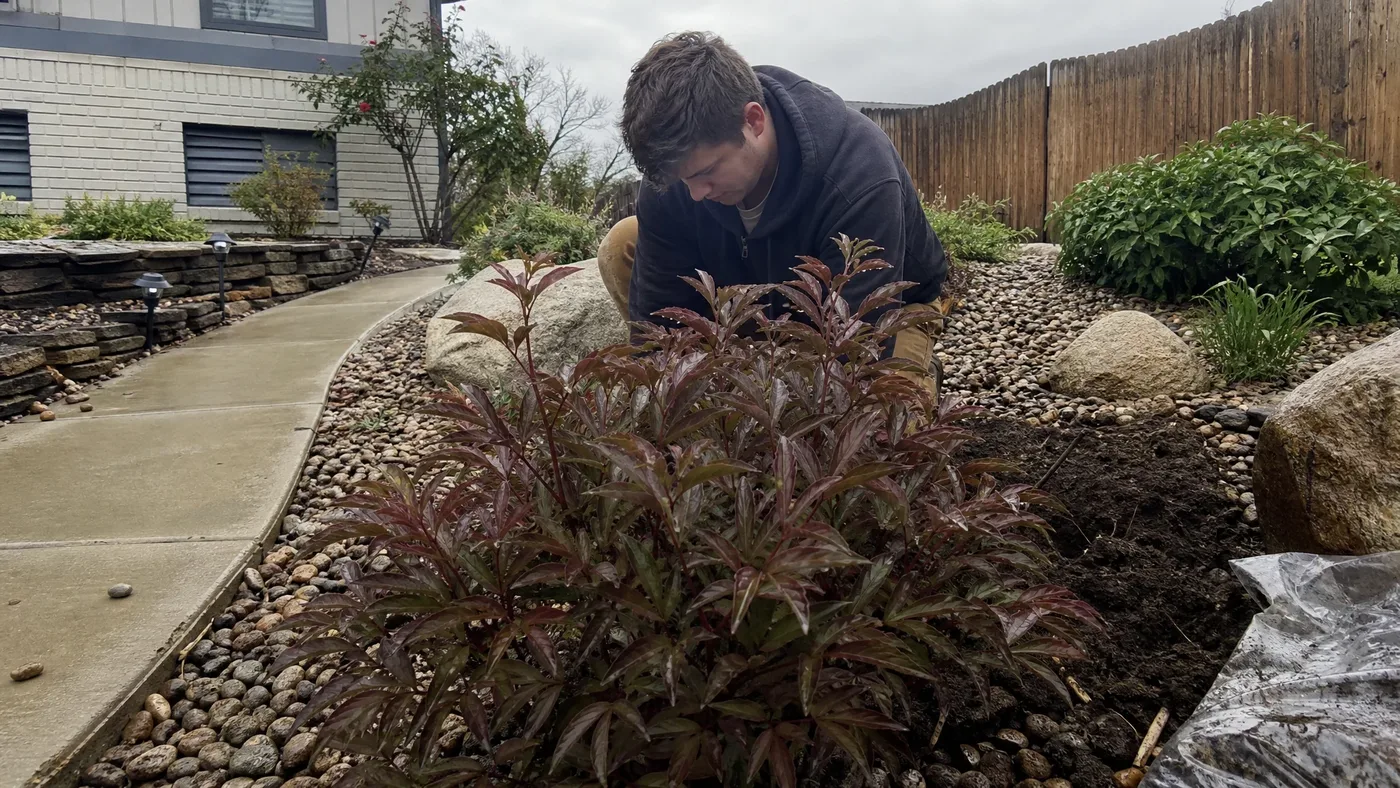
Growing Karl Rosenfield and Sarah Bernhardt Peonies Together
Every fall, bare-root crowns of Karl Rosenfield and Sarah Bernhardt turn up in the same bundle, and the tag promises weeks of color. We doubt claims like that until they come with numbers, and a 24-foot border is a fair place to test this one.
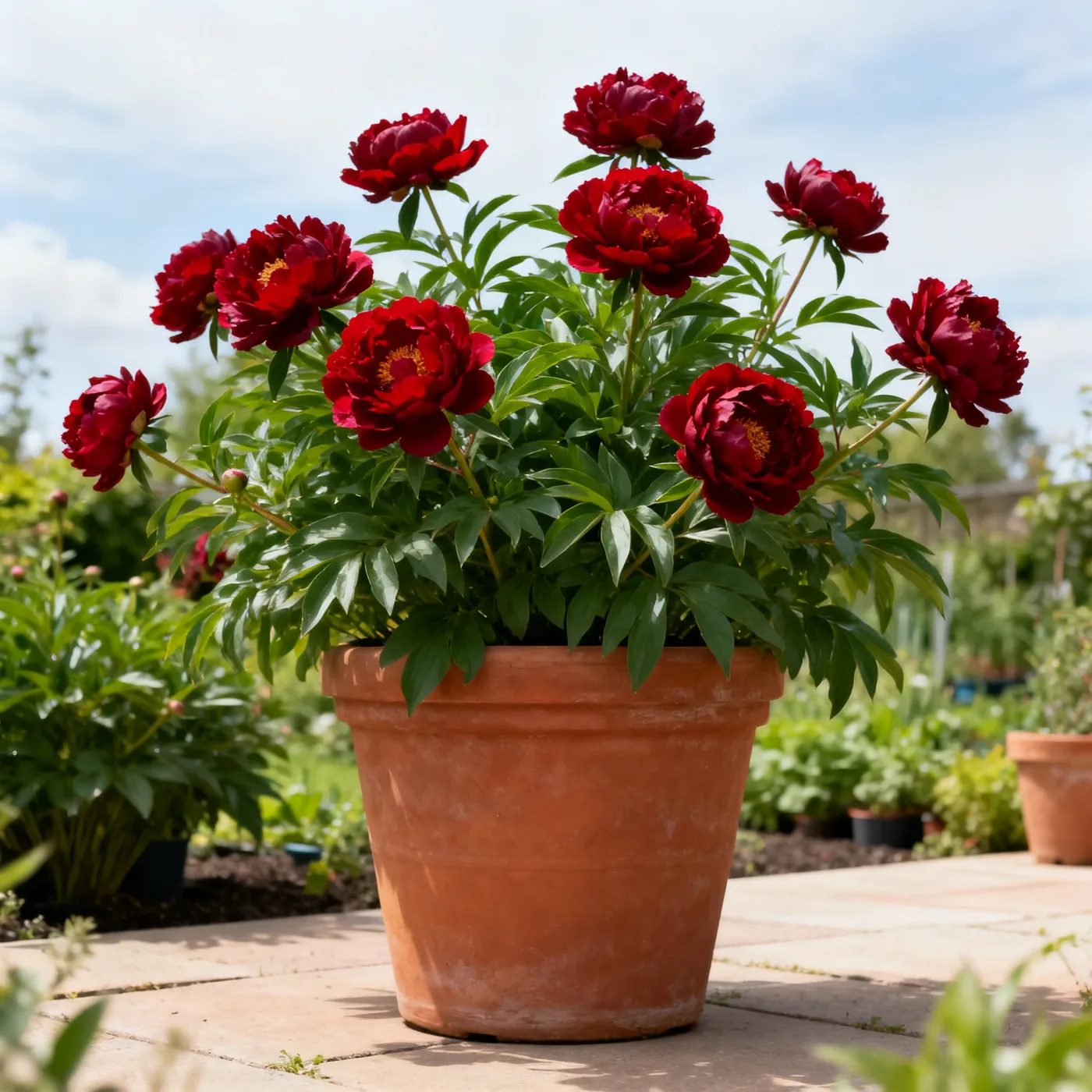
Each peony plant blooms for about two weeks, so a pair only helps if the two weeks are offset. Karl Rosenfield opens first in deep red, and Sarah Bernhardt follows in soft pink near the end of the peony season. How you plant them this fall decides whether the border is full enough to be worth counting.
Below, you'll find out all about combining the two in one bed, including how to space them, how deep to set the crowns, how many extra days of color to expect, and where the pairing falls short.
Does Pairing Really Stretch the Season?
The claim is simple: two cultivars, a longer show. On paper it holds up. NC State Extension says each plant blooms for about two weeks in late spring to early summer, and it recommends staggered bloom times to extend the season. One cultivar alone gives you roughly fourteen days of flowers. The word that makes us skeptical is "weeks," plural. That only happens if the second plant starts close to when the first one ends.
Sarah Bernhardt is a dark-rose to pink peony that blooms toward the end of the peony season. That tells you the order, red first and pink after. It does not tell you the gap, and the gap is the whole question.
What Would Count as Evidence
Judge the claim by one measurement: the number of days between the first open flower anywhere in the border and the last fresh one. Compare that with the two-week run of a single plant. Log it for at least two springs, because one cool or hot year proves nothing. We would call a gain of several days a fair result, and we would be wary of any tag that promises more.
The pairing can help. The marketing just promises more than two plants can deliver.
Our Example, a 24-Foot Sunny Border
Every number below comes from one worked example, so you can swap in your own length and see how the plan scales. Our test bed is a single straight run of 24 feet, planted as one row so the alternation stays easy to see and to measure.
Site and Zone
The border gets full sun, meaning at least 6 hours of direct light a day, which is what herbaceous peonies need. We place it in zone 6, in the middle of the 5–7 range where herbaceous peonies do best, though they can grow in zones 3–8. Herbaceous peonies also grow better in full sun, which is why we would not hand a shady strip to this experiment. Check your own hardiness zone and climate needs before you copy the plan.
The Plant List
The plan calls for six crowns, three Karl Rosenfield and three Sarah Bernhardt, planted bare-root in fall. Fall is the best time to plant bare-root crowns from a nursery. If you are weighing bare-root against potted plants for a border this size, our buying guide lays out the trade-offs. Three of each gives you a repeating rhythm instead of one red clump and one pink clump.
Spacing Math for Karl Rosenfield Peony and Sarah Bernhardt
Plant peonies 3 to 4 feet apart. That range gives two possible counts for 24 feet. At 3 feet you get eight plants, and at 4 feet you get six. We choose 4 feet. Herbaceous peonies spread up to 3 feet at maturity, so at 3-foot spacing a full-size plant would touch both neighbors with no room to reach in and cut flowers. At 4 feet you keep about a foot of working space between mature plants.
Now the layout. Set the end plants half a spacing, 2 feet, in from each end of the border. Then every plant sits 4 feet from the next, and the last one lands 2 feet from the far end: 2 + (5 × 4) + 2 = 24. Alternate the cultivars strictly. Start with Karl Rosenfield at the left end and finish with Sarah Bernhardt at the right, so the bed reads from red to pink as you walk along it.
| Plant | Cultivar | Distance from left end |
|---|---|---|
| 1 | Karl Rosenfield | 2 feet |
| 2 | Sarah Bernhardt | 6 feet |
| 3 | Karl Rosenfield | 10 feet |
| 4 | Sarah Bernhardt | 14 feet |
| 5 | Karl Rosenfield | 18 feet |
| 6 | Sarah Bernhardt | 22 feet |
Each cultivar ends up 8 feet from its own kind, which is what keeps the border from splitting into two blocks. Expect it to look sparse for the first few years. Resist filling the gaps with extra crowns, because they will crowd each other later.
Setting Crowns at the Right Depth
Depth matters more here than in a typical planting, because a crown set too deep may sit green and skip its flowers, which would wreck the bloom log you are trying to keep. Cover the bright red buds with no more than 1 inch of soil, since deep planting reduces flowering. We use the same depth for both cultivars so they settle at the same rate. For the full walk-through, see our guide to planting Karl Rosenfield for years of blooms.
- Prepare the bed in fall. The ideal is deep, fertile, humus-rich soil that is moist but well drained, so work in compost and loosen the soil below where the roots will sit.
- Check the pH. Peonies thrive in slightly acidic soil, pH 6.0–7.0, while NC State lists acid soil below 6.0. The two ranges disagree, so ask your local extension service what suits your soil before you amend anything.
- Mark the six positions from the table with stakes, measuring from the left end of the border.
- Dig each hole wide enough to spread the roots without bending them.
- Lay a cane or flat stick across the hole at soil level. Set the crown so the buds sit about 1 inch below it.
- Backfill, firm the soil gently by hand and water well to settle it. Keep the bright red buds at that depth as the soil sinks, because soil that settles above them is the usual way a crown ends up too deep.
Measure each crown against the stick every time. It takes a minute and protects years of flowers.
What the Calendar Gives Karl Rosenfield Peony Growers
Karl Rosenfield blooms May to June in full sun, and Sarah Bernhardt comes toward the end of the peony season. No day count between them is given, and we will not invent one. What we can do is the arithmetic. With two weeks of bloom per plant, the total run equals 14 days plus however many days apart the first flowers open.
| Gap between first open flowers | Total run of color |
|---|---|
| 0 days (they open together) | 14 days |
| 7 days | 21 days |
| 14 days (back to back) | 28 days |
Those rows are scenarios, not forecasts. Your own spring will land you in one of them. We plan on the middle row and treat anything beyond it as a bonus. Customers usually ask us how many extra days they will get, and the honest answer is that it depends on the spring and on how mature the plants are.
Maturity matters too. Herbaceous peonies take 2–5 years to reach maturity, so a young border will under-deliver at first. Our bloom time and color guide covers how long a single Karl Rosenfield flower lasts. Where the two bloom periods overlap, you get red and pink side by side, and we count that as a feature, not a flaw.
Karl Rosenfield Peony Gaps That Pairing Won't Fix
A second cultivar adds days to the run. It cannot remove the limits that every peony border shares.
Weather and Short Gaps
A heavy rain can flatten open flowers in either cultivar, and no pairing prevents that. A cool or warm spring can also shift the whole calendar, so the gap you measured one year may shrink the next. If the two cultivars open within a few days of each other, you have one bigger show instead of a sequence. We would not add a third cultivar to fix this unless your log shows a clear hole.
Uneven Size and Support
Sarah Bernhardt reaches about 3 feet on erect stems, with fragrant, rose-pink double flowers around 8 inches across. Large double flowers like these may need support, especially when wet with rain. Set supports in early spring, before the stems fill in, and check how Karl Rosenfield compares in your own bed so you can size the rings to the taller plant.
In our rows, the crowns that never flower are almost always the ones set too deep, so before you blame the pairing, read why a Karl Rosenfield may not bloom.
Verdict on Karl Rosenfield Peony Plus Sarah Bernhardt
Our judgment is that the pairing is worth it, with modest expectations. You gain extra days of bloom, a color change from deep red to soft pink, and a border that looks planned instead of assembled. You do not gain a month of flowers from peonies alone, and the sources give no reason to promise one.
It suits gardeners with a long, sunny run of 20 feet or more who can wait out the 2–5 years to maturity. If you have room for only one or two peonies, pick a single cultivar and give it space, because splitting a tiny bed between two buys little. If you want color for months, plan other plants around the peonies, and our guide to companion plants for Karl Rosenfield is a good place to start.
Planting the Numbers for Karl Rosenfield and Sarah Bernhardt
The gain from pairing is real but modest, and it depends on the plan. Plant six crowns at 4-foot spacing in full sun, alternate the cultivars, and keep the buds no more than 1 inch under the soil. Then log your own bloom dates for two springs. If you plant the numbers as laid out, the pairing pays back the wait.
Karl Rosenfield Peony
Nursery-grown Karl Rosenfield Peony in sizes from 2 Gallon, shipped to your door.
From $62.95
Shop Now →Karl Rosenfield and Sarah Bernhardt both do their best in our full-sun rows, set deep in rich soil with the eyes just below the surface and room left between clumps. Growers like us, a small team with our own farms, raise only top-quality plants, and we would love to see this pair bloom in your garden. Choose a Karl Rosenfield, and a Sarah Bernhardt to follow it, whenever you feel ready.