Karl Rosenfield Peony Bloom Time, Color and How Long It Lasts
Late September is peak season for planning spring bloomers. If you're planting peonies this fall, understanding the Karl Rosenfield peony bloom time, color intensity, and bloom longevity will help you design your garden around their peak display. This cultivar is a reliable performer in zones 3 through 8, and knowing what to expect from its blooms makes it easier to pair with companion plants and schedule your garden's color progression.
When Do Karl Rosenfield Peonies Bloom
Karl Rosenfield Peonies typically bloom in late spring to early summer. Across their growing range (zones 3 to 8), expect blooms to appear in May or June, though the exact timing shifts with your location and spring temperatures.
In zone 3 and 4, late frosts can delay bloom by a week or two; blooms often appear in mid to late June. Moving south to zones 5 and 6, late May is typical. Zones 7 and 8 see earlier bloom, often in May, sometimes touching late April in exceptional years. The plant responds to soil temperature and day length, not to calendar dates, so a cold spring postpones the show.
Knowing your zone's average bloom window helps you schedule complementary plantings. Pair Karl Rosenfield with late bearded iris (which blooms slightly earlier) or catmint and salvia (which bloom at the same time or just after) to build continuous color from spring into early summer.
The Color You'll See
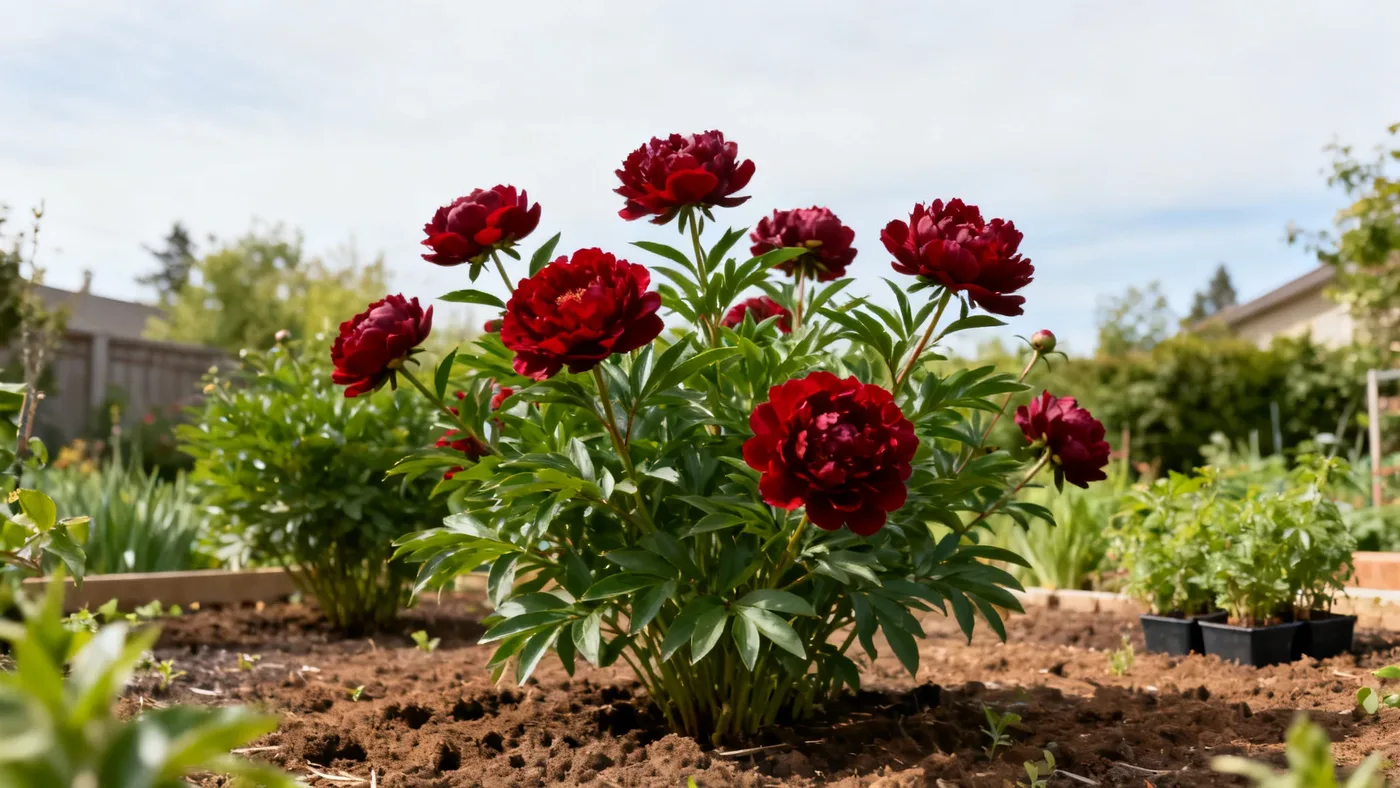
The Karl Rosenfield peony color is a deep red to crimson that stands out in the garden. This is not a light pink or coral; it is a bold, cool-toned red that reads as burgundy in certain light. The petals are glossy, giving the blooms an almost jewel-like appearance, especially when backlit by morning sun.
Karl Rosenfield is a double cultivar, meaning it has many layers of petals (often 50 or more per flower) that pack tightly together. The center petals may be slightly paler than the outer petals, creating depth. As blooms age over their lifespan, they may darken slightly or develop subtle purple undertones, but the red intensity remains strong.
The foliage also contributes to the visual display. The glossy, dark green, deeply divided compound leaves create a fine texture that contrasts with the bold flower color. In fall, after frost, the foliage takes on bronze to burgundy tones, extending seasonal interest beyond the bloom period.
One thing to note: Karl Rosenfield has a light, mild fragrance compared to many other lactiflora cultivars, so if you're planting for scent, pair it with more fragrant varieties like Sarah Bernhardt or Festiva Maxima.
How Long Do Karl Rosenfield Peony Blooms Last
Individual Karl Rosenfield blooms typically last 7 to 10 days once they open. That means a single flower goes from tight bud to fully open to fading petals within just over a week. The exact duration depends on temperature: cooler spring weather extends bloom life, while heat speeds decline.
Because each plant produces multiple stems and blooms stagger their opening, the overall flowering display lasts longer than a single bloom. A mature plant in full bloom may show color for 2 to 3 weeks as the earliest buds open, peak, and fall while later buds are just cracking open.
To maximize how long you enjoy the blooms, cut spent flowers as soon as petals begin to drop. This directs the plant's energy back into the root system rather than seed production. Remove the entire flower head, leaving the stem and foliage intact. If you like cut peonies indoors, harvest blooms at the tight bud stage and bring them inside; they'll open over several days on your counter or in a vase, giving you two bloom periods for the price of one.
First-Year Blooms vs. Full Flowering Potential
A newly planted peony may bloom lightly in its first year after planting, but do not expect the full show. Karl Rosenfield typically takes 2 to 3 growing seasons to reach its mature flowering potential. This is normal and not a sign of a problem.
Why? Young peonies are building their root system, which is extensive and tuberous. The plant prioritizes underground growth before it invests heavily in above-ground blooms. If your newly planted peony produces 3 or 4 blooms in year one, that is success. Year two may bring 10 to 15 blooms, and by year three, a mature clump produces 20 to 30 blooms or more, depending on sun and soil.
This is one reason fall planting is ideal. A bare-root division planted in October or November is already an established clump divided from a mature plant. It establishes roots over winter and spring, so your first spring bloom (2 to 3 months after planting) is often fuller than you'd expect from a young nursery plant.
Why Heavy Blooms Need Support
The Karl Rosenfield peony flower is a double bloom packed with petals. After rain or heavy dew, these blooms become surprisingly heavy. Without support, stems (which grow 28 to 36 inches tall) can flop to the ground, bending or breaking under the weight.
Install peony support rings or grow-through cages in early spring as shoots emerge, before the plant reaches full height. A wide, sturdy cage (24 to 36 inches in diameter) gives blooms room to open while keeping stems upright. Bamboo stakes and twine work if cages aren't available, but they're fussier to manage and can damage foliage.
Plant Karl Rosenfield in full sun (6 or more hours daily) and avoid overcrowding. Good air circulation dries dew faster and reduces disease pressure while supporting the overall structure of the plant. Spacing plants 3 to 4 feet apart prevents the dense, floppy center that develops when plants are too close.
Fall Planting Sets You Up for Spring Success
If you're reading this in September or October, now is the time to plant bare-root peony divisions. Fall is the best planting season for peonies because they need cool soil and dormancy to establish roots before spring growth begins.
Bare-root divisions planted in fall have until May or June to root in place, so they're stable and ready to bloom more robustly than spring-planted container peonies. Container peonies can be planted in spring, but they rarely bloom well until their second year.
When you plant, the crown (where the stems attach to the roots) should sit no deeper than 1 to 2 inches below the soil surface. Planting too deep is the top reason peonies fail to bloom. The eyes (growing points) must be close to the surface to reach spring warmth and trigger flowering.
Prepare the planting hole with fertile, well-drained loam at a pH of 6.5 to 7.0. Avoid soggy soil; peonies tolerate moderate drought once established but do not survive waterlogged clay. Work in compost or aged manure to improve structure, then firm the soil around the roots and water thoroughly.
For more detailed planting and care steps, refer to our Karl Rosenfield Peony care guide.
Seasonal Bloom Timeline Quick Reference
| Zone | Typical Bloom Months | First-Year Blooms | Full Bloom Potential |
|---|---|---|---|
| 3-4 | Mid to Late June | Light (a few blooms) | Year 2-3 after planting |
| 5-6 | Late May to Early June | Light (a few blooms) | Year 2-3 after planting |
| 7-8 | May, sometimes late April | Light (a few blooms) | Year 2-3 after planting |
Bloom Care Checklist
- Install peony support cage in spring before stems reach full height
- Deadhead (remove) spent blooms as petals fall to redirect energy to roots
- Water deeply during bloom time if spring is dry; aim for about 1 inch per week
- Harvest cut peonies at the tight bud stage for longer indoor enjoyment
- Monitor foliage for Botrytis blight in cool, wet springs; remove affected stems
- Allow foliage to stay on the plant until after first hard frost before cutting back
- Plant bare-root divisions in fall for stronger first-season bloom