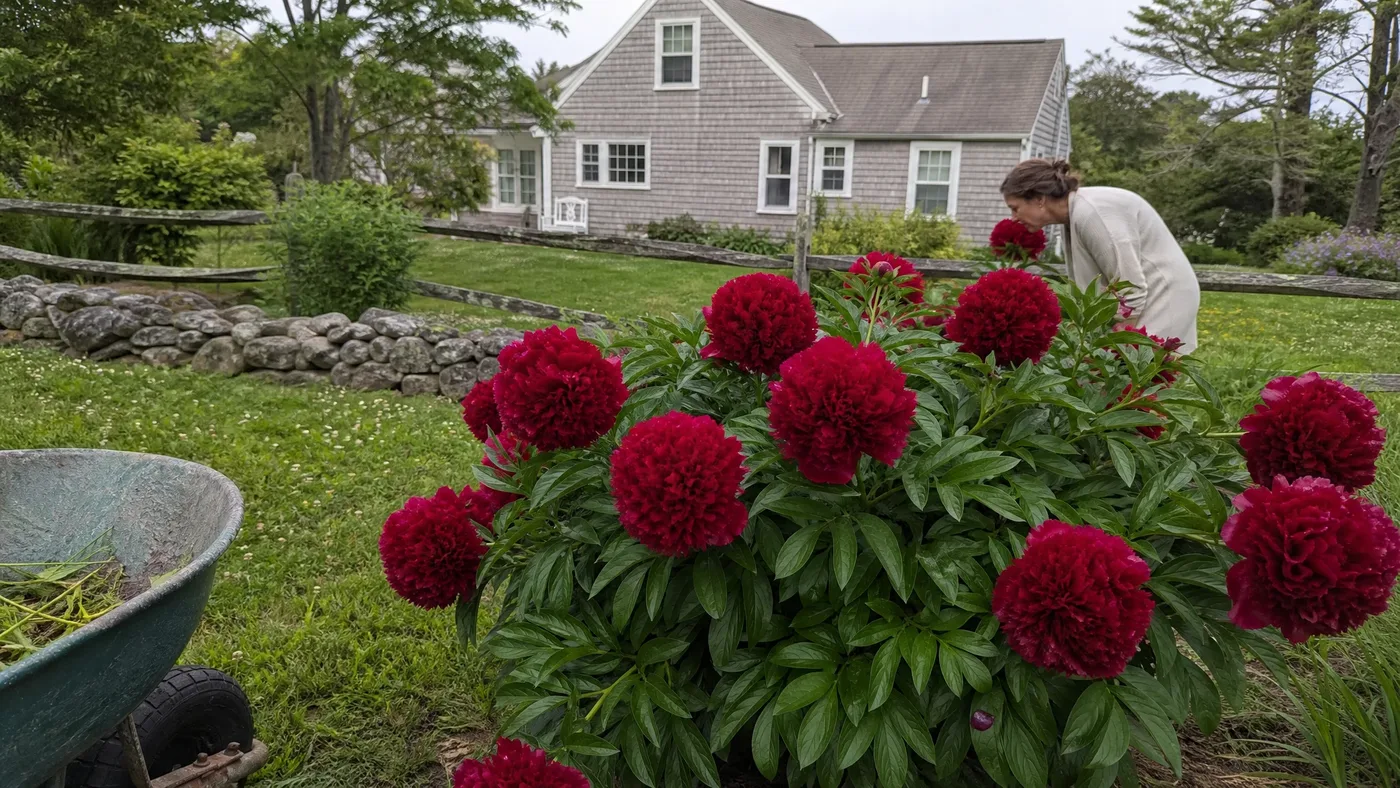
Is Karl Rosenfield Peony Fragrant? What to Expect
An old nursery catalog praised this red peony for its perfume, and the line has been copied onto plant tags and listings ever since. Plant it today, cut a bloom on a warm morning in season, and you may find the praise only partly true.
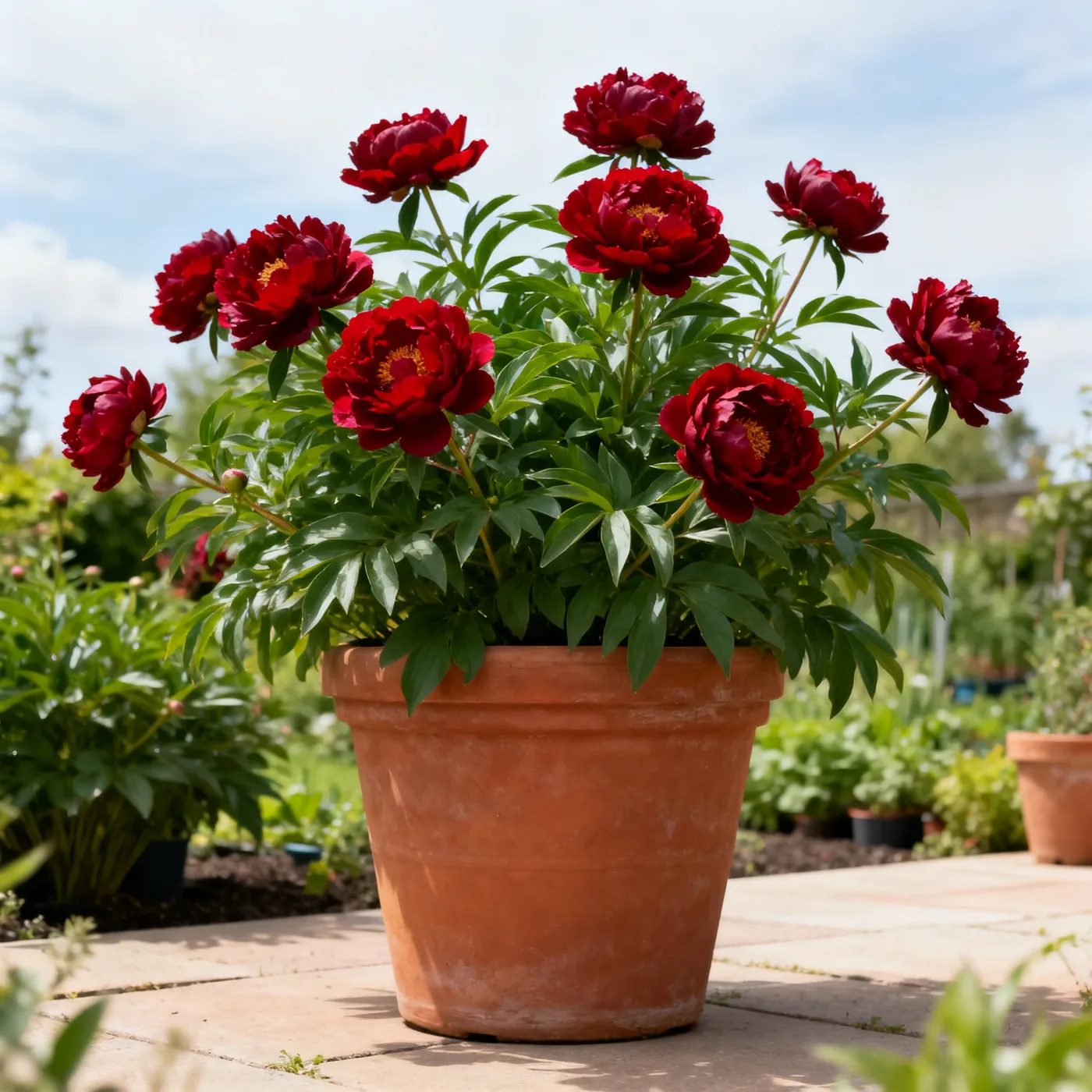
The honest answer is that Karl Rosenfield smells pleasant, with a mild-to-moderate, slightly spicy rose note, but it does not fill a garden the way Sarah Bernhardt can. How strong you find it also depends on more than the cultivar. Soil, light, heat and the stage you cut at all change what reaches your nose.
In this article, we'll go through where the scent reputation came from, how Karl Rosenfield compares with famously fragrant lactifloras, and how to cut and place stems so you actually notice the perfume.
The Old Reputation of Karl Rosenfield Peony Scent
Catalogs from the heirloom era had little room to describe a flower, so a good red peony usually got one sentence covering its color, its sturdy stems and its perfume. Karl Rosenfield earned that sentence on the first two counts without much argument. The perfume rode along because it was pleasant, and because nobody printed a line saying a peony smelled faint.
We cannot point to one catalog and quote it, and we would rather say so than invent a quotation. Reputation also travels by copying. A phrase from one old listing gets lifted into the next, then onto tags and web pages, and after enough repeats it reads as settled fact.
What we tell customers is to read "fragrant" on a listing as a yes-or-no label that says nothing about strength.
Why the Memory Runs Stronger Than the Flower
Memory adds the rest. Karl Rosenfield is a long-lived lactiflora, the kind of peony that sits in one spot for decades, so many people first met it in an older relative's garden. Scent memory is tied closely to place and season, and a red bloom smelled once on a warm June morning gets remembered as stronger than it was.
That is the reason the reputation has lasted, and the reason a young plant's first flowers can feel like a small letdown.
Where the Name and the Perfume Came From
Karl Rosenfield carries a person's name, as many older lactiflora cultivars do, and its botanical name is Paeonia lactiflora 'Karl Rosenfield'. The single quotation marks mark a cultivar, a named selection that nurseries multiply by division, so every plant is the same clone. For scent that means you get the fragrance of the original selection every time, not the luck of a seedling.
We have no verified introduction year or breeder record to cite, so we will not give you one. A peony society registry or your local extension service can fill that in.
Why the Perfume Is Moderate
Lactiflora is the species behind most herbaceous garden peonies, and fragrance runs through it from faint to heady. Selecting for a particular red, a full flower and stems that stand up to rain means choosing traits you can see. Scent is harder to judge, because the bloom window is short and the smell shifts with weather and time of day.
Our reading is that Karl Rosenfield's scent landed in the middle largely by chance, though that is an inference, not a documented fact.
The character is rose-like with a slightly spicy edge. It reads as a classic garden perfume rather than a sweet, heavy one, which is why it sits comfortably in a mixed vase.
What Karl Rosenfield Peony Actually Smells Like
Put your nose within a few inches of a fully open bloom and you will find a mild-to-moderate scent, rose-like with a slightly spicy edge. By mild-to-moderate we mean you notice it when you lean in, not from across the bed. So the plain answer to what people search for is yes, Karl Rosenfield is fragrant, but gently, and it is not a cultivar to buy for perfume alone.
Close Up Versus Across the Garden
Scent travels as volatile compounds, which are light molecules that leave the petal surface and drift into the air. A mild cultivar releases fewer of them, so the cloud stays small and thins out within a pace or two. On a still day it hangs near the flower. In wind you may smell nothing at all, which is why a clump beside a path or a seat beats one at the back of a border.
How the Scent Builds as the Flower Opens
A tight bud smells of very little. The scent builds as the petals loosen and is usually at its best soon after the flower opens fully. Karl Rosenfield blooms May to June, and each flower gives its best scent for only part of that window. Our bloom time and duration guide covers the timing in detail.
In our rows, the scent is easiest to catch on a still, warm morning, close to a flower that has just opened.
What Soil and Sun Do to Fragrance
Petals make scent from sugars, and sugars come from leaves working in light, so the first thing that mutes a peony's perfume is a canopy that is not getting enough sun. As we understand it, a plant making fewer sugars builds smaller flowers with less to give. NC State Extension describes full sun for herbaceous peonies as 6 or more hours of direct sunlight a day.
Peonies also want full sun, with at least six hours of direct sun each day. We know of no measured scent-per-hour figure, so treat this as cause and effect, not a formula. Our sun and light guide covers shady sites.
Heat and Weather
Warm air helps a flower release scent, but a heat wave pushes blooms open fast and shortens their life, so the perfume is spent in a short rush. Mild days stretch the bloom, and the scent with it. Rain does the reverse. Soaked petals collapse and brown at the edges, and what you smell afterward is damp, not rose.
Soil and Feeding
Soil acts through the roots. Waterlogged or compacted ground starves roots of oxygen, the plant weakens, and it puts out less of everything, scent included. Lactiflora likes deep, fertile, humus-rich soil that is moist but well drained, meaning loose ground full of decayed organic matter that holds water without sitting in it.
For pH, a measure of how acid or alkaline soil is, Purdue Extension says peonies thrive in slightly acidic soil (pH 6.0-7.0), while NC State lists acid soil below 6.0. The sources differ, so test your soil and ask your local extension service. Our soil, drainage and pH guide goes further.
How Karl Rosenfield Peony Compares With Famous Scented Lactifloras
On the ranking we use, Karl Rosenfield sits below Sarah Bernhardt and Duchesse de Nemours for scent strength. Sarah Bernhardt is the cultivar most people mean when they say a peony smells wonderful, with fragrant, rose-pink double flowers that measure about 8 inches across. The table puts the three side by side.
| Cultivar | Scent strength | Character |
|---|---|---|
| Karl Rosenfield | Mild to moderate | Rose-like with a slightly spicy edge, best noticed up close |
| Sarah Bernhardt | Stronger | Fragrant, on rose-pink double flowers |
| Duchesse de Nemours | Stronger | Counted among the famously fragrant lactifloras |
Listings often say "fragrant" with no ranking, and the common advice that any lactiflora will perfume a room is too generous. Cultivar sets the ceiling, and growing conditions decide how close you get to it.
One of the most common questions we get is whether it smells like the pink peonies people remember. The character is related, but the volume is lower. We grow and sell Karl Rosenfield, and we would still tell you to choose it for its red color and reliable form first. If scent matters most, plant it near one of the stronger cultivars and enjoy both.
Cutting Karl Rosenfield Peony Stems at the Marshmallow Stage
The marshmallow stage is the moment a closed bud has swelled, shows color along its seams, and gives slightly when pressed gently, like a marshmallow, instead of feeling hard as a pea. Cut at this point, the bud opens in water and the petals hold their condition longer than a flower cut fully open.
You also carry a mild perfume into a closed room, where a small cloud of scent is much easier to notice than outdoors in a breeze.
- Cut in the cool of the morning, when stems are full of water and the buds have not warmed up.
- Squeeze a bud very gently. If it feels hard, leave it for a day or two, because a bud cut too tight may never open.
- Cut with clean, sharp pruners just above a leaf, and leave several leaves on the plant so it can keep feeding its roots for next year.
- Strip the leaves that would sit below the water line and stand the stems in clean water right away.
- Keep the vase in a cool room out of direct sun while the buds open, then move it to where you sit.
Warmth speeds opening, which is also why a vase on a sunny sill gives you a quick bloom and a short-lived scent. If ants are crawling over the buds, they are harmless to the flower but you can shake them off before you bring stems in.
Take only part of a young clump's stems, since a plant still building its crown needs its leaves.
Scent Problems in Karl Rosenfield Peony and Their Causes
A faint clump nearly always has a cause you can find, and the cause usually shows in more than the scent. We work backward from what you see, because the symptom points to the likely reason.
- Small, thin flowers on a recently planted clump usually mean the plant is still young. The species takes 2–5 years to reach maturity, and a small flower has less to give. Patience does the most here, and our guide to peonies that will not bloom covers the slow years.
- Plenty of leaves and few flowers points to too much shade or too much nitrogen, which pushes leaf growth at the expense of buds.
- A pleasant scent that vanishes by midday suggests heat. Open blooms release their perfume quickly in a hot spell, and moving the vase or cutting earlier helps.
- A musty or sour smell in place of rose usually means rot, most often gray mold on buds or petals after wet weather. Our pests and diseases guide shows how to recognize it.
- No scent at all from a flower you were sure you smelled yesterday is often just nose fatigue, since the nose stops registering a mild scent after a minute or so. Step away, then come back.
A Modest Perfume Worth Its Place
Karl Rosenfield is fragrant in a quiet, rose-like way with a slightly spicy edge, lighter than Sarah Bernhardt or Duchesse de Nemours. Full sun, deep and well-drained soil and a plant allowed to mature give you the best of it. Cutting at the marshmallow stage and bringing stems indoors makes a mild perfume easier to enjoy than leaving it to the wind.
Plant it where you will be close to it, because distance is what hides this scent. Set a stool or bench within arm's reach of the clump so the scent is noticed on a warm morning.
Karl Rosenfield Peony
Nursery-grown Karl Rosenfield Peony in sizes from 2 Gallon, shipped to your door.
From $62.95
Shop Now →Our Karl Rosenfield grows in deep, humus-rich soil and full sun, with space left around every clump so air and light reach it. We are a small team of growers tending top-quality plants on our own farms, and we know a peony like this is best enjoyed up close. If a rose-and-spice scent sounds right for you, pick out a plant and set it beside your favorite path.