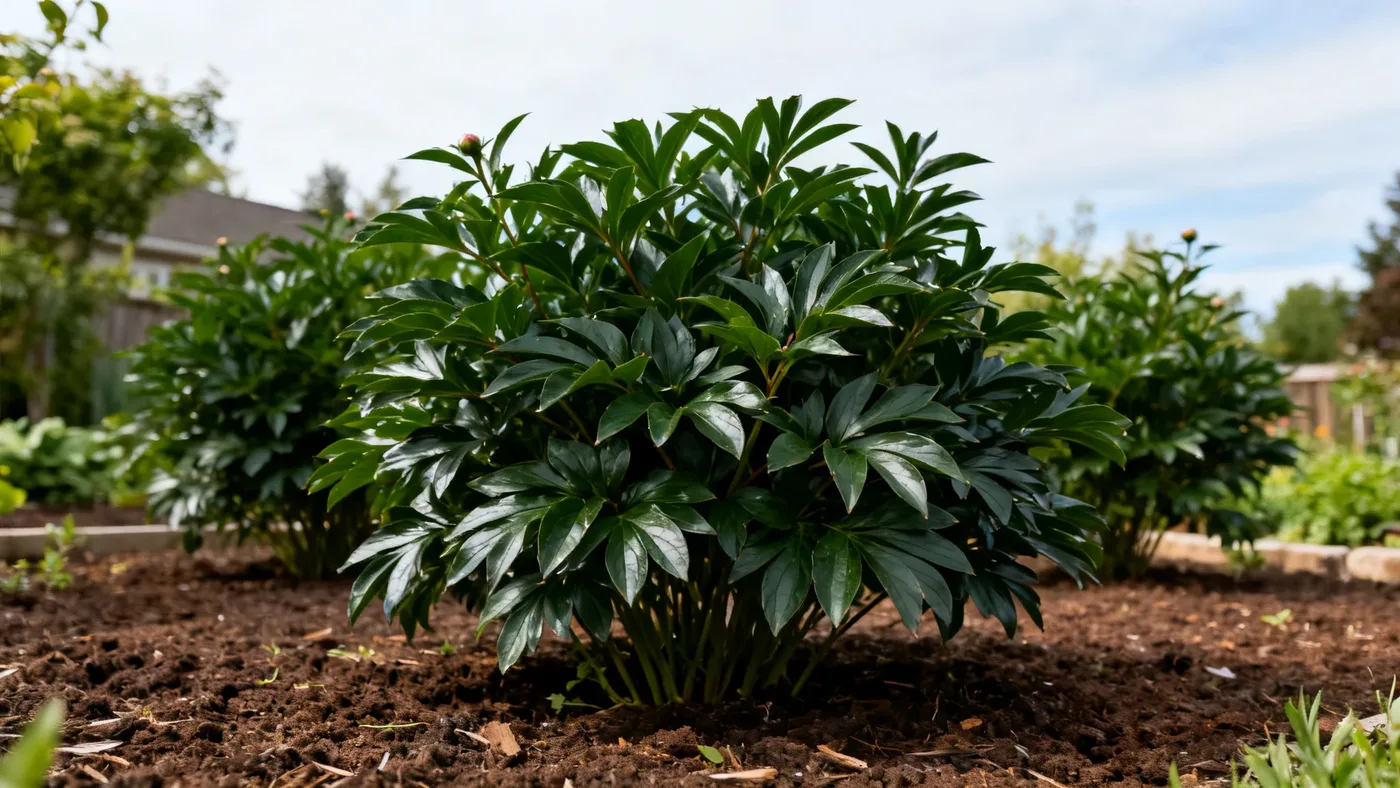
9 Common Karl Rosenfield Peony Pests, Diseases and Problems
Karl Rosenfield Peonies are hardy perennials, but even the most vigorous growers run into trouble from time to time. Knowing what to watch for during the growing season can mean the difference between a flourishing plant and one that struggles to bloom. The good news: most issues are preventable or treatable with straightforward tactics.
1. Botrytis Blight: The Cool-Spring Culprit
Botrytis blight thrives in cool, wet conditions and is one of the most common karl rosenfield peony problems gardeners face, especially in spring. You'll notice grayish-brown spots on emerging shoots and buds, and the affected tissue may feel soft and mushy. In severe cases, entire shoots can turn black and collapse before the plant gets going.
This fungal disease spreads by spores that travel in water droplets, so it's worst when you have cool nights, wet foliage, and poor air circulation. The key is catching it early. Remove and destroy any affected shoots as soon as you spot them. Don't compost the debris; discard it to prevent spores from spreading.
What to do: Space peonies 3 to 4 feet apart to ensure good airflow. Water at the base of the plant in early morning, not overhead. If botrytis appears, thin out dense foliage to let air move through the clump. A fungicide labeled for peony blight may help, but removal and sanitation are your best bets.
2. Powdery Mildew: The Gray-White Coating
Powdery mildew appears as a fine, dusty gray-white film on the leaves and sometimes on the stems. Unlike many fungal diseases, it actually prefers dry conditions and cool nights. You might see it starting mid to late summer, especially after a stretch of warm days and cool, humid nights.
While powdery mildew rarely kills a Karl Rosenfield Peony, it can weaken the plant and reduce vigor for next season. The plant gets stressed, and energy that should go into building the crown and roots gets diverted to fighting the disease. Early spotting makes it easier to manage.
What to do: Remove infected leaves promptly. Improve air circulation by pruning lower foliage and spacing plants well apart. Avoid overhead watering. If infection spreads, apply a sulfur-based fungicide or another powdery-mildew-specific product, following label directions. Spray in the early morning or late evening.
3. Leaf Spot: Browning from Cladosporium and Graphiopsis
Leaf spot diseases caused by fungi like Cladosporium and Graphiopsis show up as brown or dark spots on the foliage, sometimes with a yellow halo around the edge. The spots start small but can merge together, making the leaf look scorched. This is one of the main peony leaf spot issues in humid climates.
Leaf spot is less immediately dangerous than botrytis, but it can spread quickly in wet conditions and reduce the plant's ability to photosynthesize. If many leaves are affected, the plant weakens and may not set flower buds for the following year. Early removal of diseased leaves stops it in its tracks.
What to do: Pick off spotted leaves and destroy them. Rake up and discard any fallen foliage in the fall. Water only at the soil level, never on the leaves. Space plants to allow air to flow through the canopy. A copper fungicide or broad-spectrum fungicide labeled for leaf spot can help if the disease spreads; apply according to label instructions.
4. Peony Wilt and Gray Mold: When Buds and Stems Fail
Peony wilt, sometimes called gray mold, causes buds to wither and turn brown before they open. You might also see wilting on stems with a grayish mold on the affected tissue. This typically happens in cool, wet springs and is closely related to botrytis. The fungal spores settle into the developing flower buds and prevent them from opening properly.
If wilt strikes hard one year, your bloom display will be severely reduced. Some gardeners mistake wilt for a nutrient issue or watering problem, but the real culprit is the fungus, and correcting water or fertilizer alone won't fix it. The disease can overwinter in dead plant material.
What to do: Remove and discard wilted buds and stems immediately. Cut back any gray-moldy growth. In fall, cut the foliage down to a few inches above ground and remove it completely. Avoid mulching right up to the crown; keep a 2-inch clear zone. If wilt returns the following spring, apply a fungicide at bud break and repeat every 7 to 10 days through bloom time.
5. Peony Scale: Tiny Pests That Weaken the Plant
Peony scale are small, hard-bodied insects that attach to the stems and roots of Karl Rosenfield Peonies and suck out the plant's sap. You might notice small, bumpy, brownish patches on the stems if you look closely. Over time, an infestation weakens the plant and slows growth, which can delay blooming or reduce flower quality.
Scale insects are hard to spot because they're tiny and blend in with the stem. They reproduce slowly compared to other pests, but once established, they persist if left untreated. A lightly infested plant might not show obvious symptoms for a season or two, which is why close inspection during spring cleanup is wise.
What to do: Inspect stems carefully when shoots emerge in spring. If you spot scale, prune out affected stems. A horticultural oil spray applied in early spring, before new growth hardens off, can smother overwintering scale. For heavy infestations, an insecticidal soap labeled for use on ornamentals can help; follow label directions carefully and repeat as needed.
6. Thrips: Tiny Insects with Big Impact on Flowers
Thrips are slender, tiny insects that feed on the flower petals and inner parts of the bloom. You might not see them until the flowers open and you notice silvery streaks, brown spots, or distorted petals on the crimson blooms. Thrip damage reduces the ornamental quality of the flowers and can make them look less vibrant.
Because Karl Rosenfield Peonies produce beautiful double flowers in late spring to early summer, they are attractive to thrips at exactly the time those pests are active. A handful of thrips won't ruin the show, but a large population can noticeably diminish your enjoyment of the blooms.
What to do: Cut and bring flowers indoors just as they open; thrips prefer to stay on the plant. Remove any heavily damaged blooms. A general-purpose insecticide or insecticidal soap applied to unopened buds can reduce thrip numbers, but timing matters because flowers open quickly. For persistent problems, consult your local cooperative extension for the best control method in your zone.
7. Root-Knot Nematodes: Underground Damage Below the Soil
Root-knot nematodes are microscopic roundworms that live in the soil and feed on plant roots. The damage they cause shows up above ground as stunted growth, wilting despite adequate water, and weak or no flowering. If you dig up an infested plant, the roots will have visible swollen knots or galls where the nematodes have fed.
Root-knot nematodes are insidious because the symptoms look like other problems, like poor drainage or nutrient deficiency. They're especially common in warm, sandy soils. Once established in a garden bed, they're difficult to eradicate and can persist for years. Preventing their arrival is far easier than treating them.
What to do: Plant only disease-free, nursery-grown stock. Avoid planting Karl Rosenfield Peonies in soil where nematode damage has occurred. If you suspect nematodes, contact your local extension service for a soil test. Crop rotation and soil solarization (clear plastic covering in hot weather) can reduce nematode populations, but peonies live in place for decades, so prevention through clean planting material is your best insurance.
8. Planting the Crown Too Deep: The Number-One Bloom Killer
One of the most common karl rosenfield peony problems is a simple planting mistake, yet it causes years of poor performance. If the crown (where the eyes, or buds, sit) is buried more than 1 to 2 inches below the soil surface, the plant will grow foliage but rarely or never bloom. New growers often plant too deep without realizing it's the culprit behind the missing flowers.
The eyes are sensitive to depth. Too shallow and they dry out; too deep and they don't get the temperature signals needed to produce flowers. This is why depth at planting is so critical. A Karl Rosenfield Peony might take 2 to 3 years to reach full flowering potential anyway, but planting the crown correctly from the start ensures you get there at all.
What to do: When planting, position the crown so the eyes sit just 1 to 2 inches below the soil surface. Use a ruler or your finger to measure if you're unsure. Water well after planting to settle the soil. If your established plant hasn't bloomed in 3 years and you know the crown is too deep, you can carefully lift the plant in fall and replant it at the correct depth. It's worth the effort. For more details on planting and long-term care, refer to the Karl Rosenfield Peony care guide.
9. Flopping Blooms: Supporting Heavy Double Flowers
Karl Rosenfield Peonies produce full, heavy double blooms that can weigh down the stems, especially after rain when the petals hold water. Without support, stems bend or even snap, and your beautiful flowers end up face-down in the mud or sitting awkwardly. This isn't a disease or pest problem, but it's a real headache for gardeners who want their peonies to shine.
The mature plant reaches 28 to 36 inches tall and 24 to 36 inches wide, so the stems have good height, but the flower weight still matters. Rain and morning dew add significant weight to a fully open bloom. Early support, before the stems get heavy, prevents damage and keeps the flowers upright and visible.
What to do: Install a peony support cage or ring when new shoots are 8 to 12 inches tall, before buds form. The stems grow up through the cage, and once they leaf out, the support is hidden. If you prefer stakes and twine, tie the stems loosely in 2 to 3 spots as they grow taller. Avoid tying too tight, which can cut into the stem. For cut flowers, pick blooms in the early morning when stems are most turgid, and they'll hold better in a vase.
Quick Reference: Karl Rosenfield Peony Problems at a Glance
| Issue | Signs | Best Time to Act | Main Control |
|---|---|---|---|
| Botrytis blight | Gray-brown spots on shoots and buds | Spring emergence | Remove infected growth, improve air flow |
| Powdery mildew | White-gray dusty coating on leaves | Mid to late summer | Prune foliage, fungicide if needed |
| Leaf spot | Brown spots with yellow halos | Wet periods, spring through fall | Remove leaves, improve spacing and air flow |
| Peony wilt | Wilted buds, gray mold on stems | Cool, wet spring | Remove affected growth, fall cleanup |
| Peony scale | Tiny bumps on stems | Early spring inspection | Prune stems, horticultural oil spray |
| Thrips | Silver streaks and spots on petals | Bloom time | Cut flowers early, insecticide on buds |
| Root-knot nematodes | Stunting, wilting, knotted roots | Prevention at planting | Use disease-free plants, soil testing |
| Crown planted too deep | No or few blooms for years | Planting time | Eyes 1–2 in below soil surface |
| Flopping blooms | Stems bend or break after rain | Early growth, before budding | Support cage or stakes and twine |