Karl Rosenfield vs Red Charm Peony: Which Should You Grow?
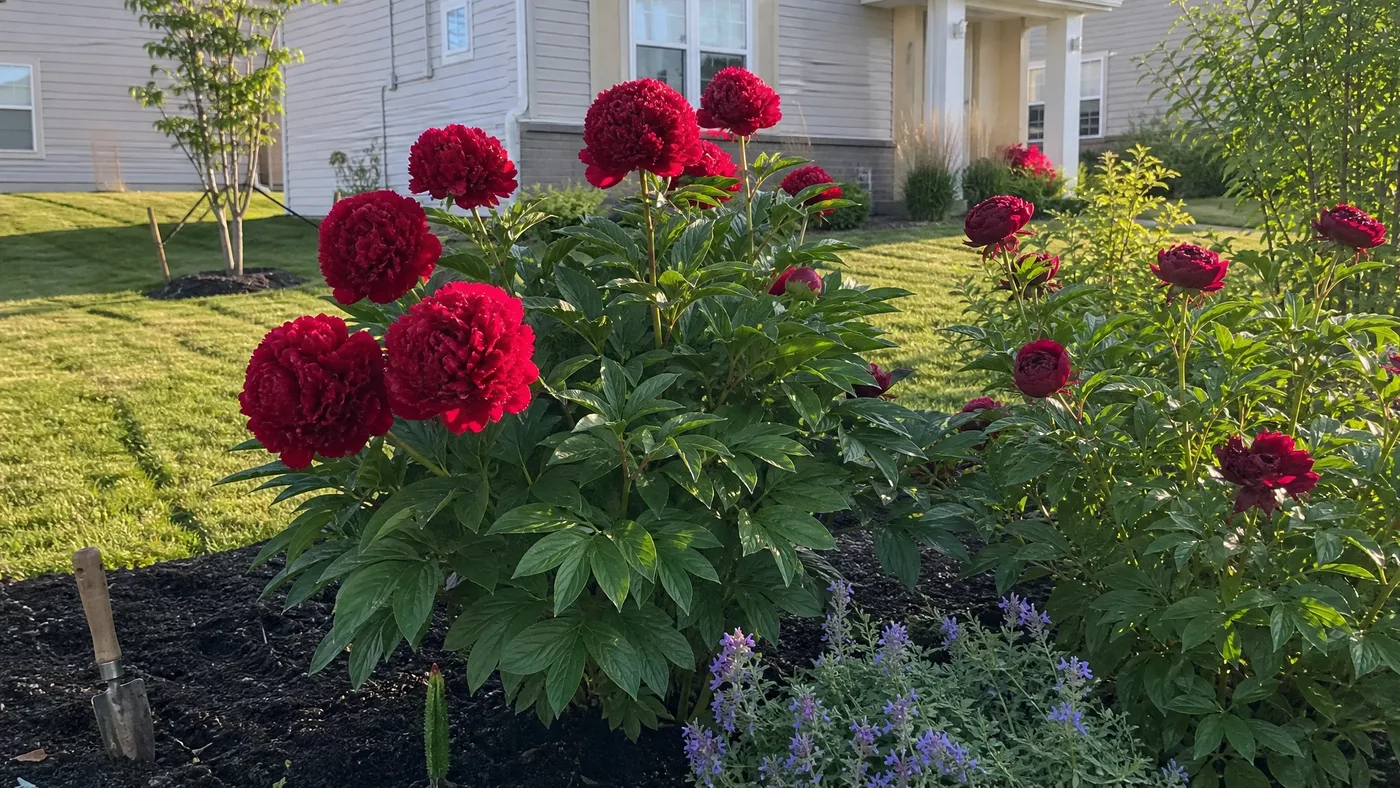
One June morning a neighbor walked over holding a phone with a photo of a dark, waxy red bloom and asked whether that was the peony growing by the porch. It took a minute of looking to say why it was not, because Karl Rosenfield and Red Charm are both deep red and both open in the same few weeks.
The choice matters because a peony stays where you put it for decades. A clump set in the wrong corner will flop, sulk or crowd its neighbors every spring you own it, and a clump set in the right one pays you back with armfuls of flowers.
Read on for four real yard situations (a narrow side bed, a windy corner, a hot deck and a cutting row), then a mixed border where both reds share space, and a plain matching of yard to cultivar.
The Narrow Side Bed Beside the Garage
A strip of bed between a garage wall and a walkway is where many people first ask which red to plant, and width is the whole question. Purdue Extension says to plant peonies 3 to 4 feet apart, so a 12-foot run holds three clumps and a 6-foot run holds one. Both reds will want that room at maturity, whatever the tag says on planting day.
How Upright Each Clump Sits
Red Charm grows up to 2.5 feet high, which gives it a bounded, tidy look against a wall. For Karl Rosenfield the best sourced figure is the species range of 1–3 feet in both height and width. So a mature Karl Rosenfield can stand a little taller than Red Charm.
Neither one sprawls like a shrub, but both arch outward once the buds swell and get heavy. Leave a hand's width or more between the stems and the siding so air can move behind the clump. A wall that holds back the afternoon sun is a bigger risk than width, since peonies bloom best with six or more hours of direct light.
What the Sidewalk Sees
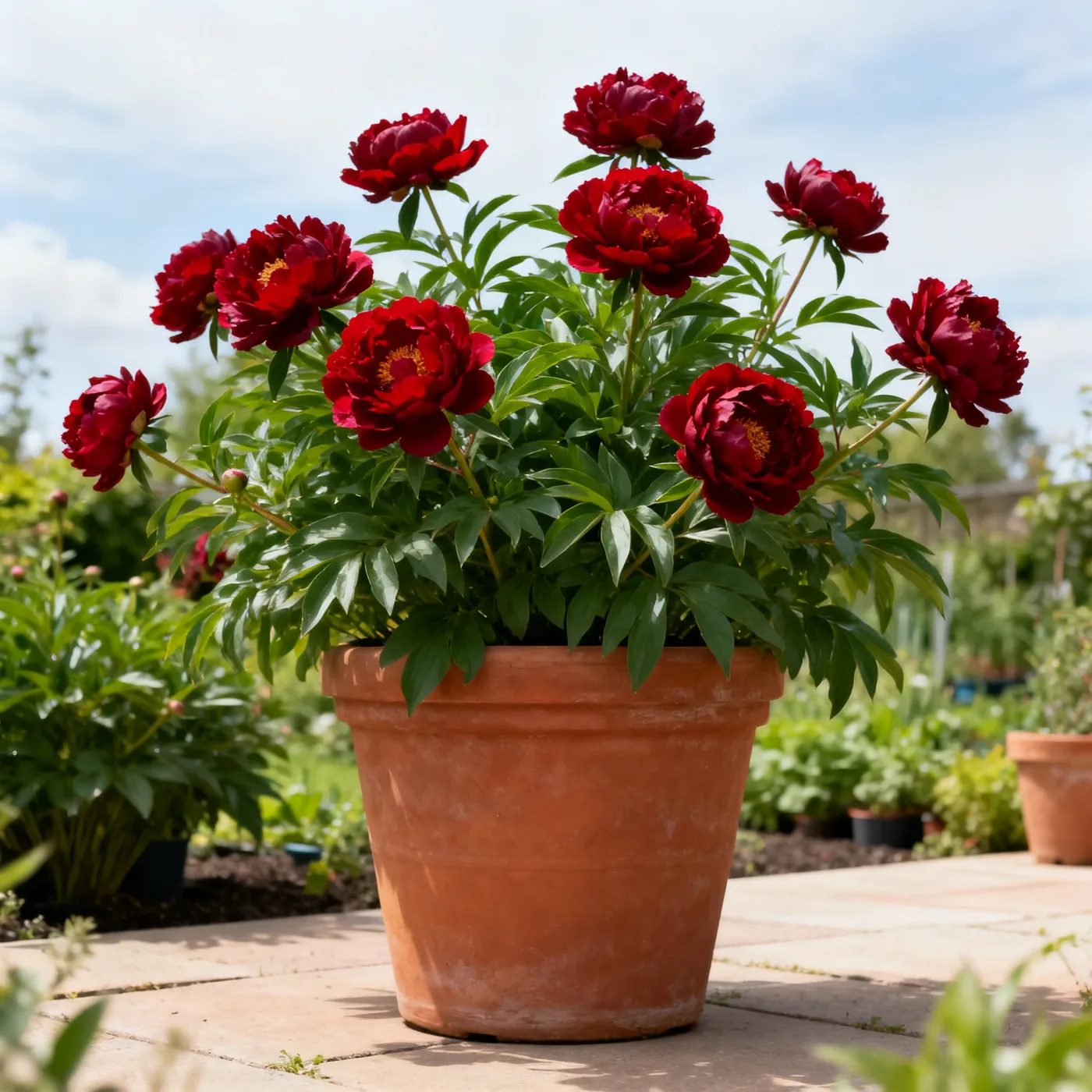
Red Charm's flowers are deep red, ruffled and double, and from the sidewalk those ruffles catch light and shadow so the bloom looks carved rather than painted. Karl Rosenfield reads as a rounder, softer red mass at the same distance. Both look good over a low wall of foliage, because the dark green leaves frame the color for months after the flowers are gone.
What we tell customers with a tight strip is to plant Red Charm, because its stated height gives you a ceiling you can plan around. If the bed can give you 3 feet each way, Karl Rosenfield fits just as well.
A Windy Corner Lot and Karl Rosenfield Peony
A corner lot catches wind from two directions, and a peony in bloom is a poor thing to put in it. The flowers are large and double, and they hold rain like a sponge, so a head that stood fine in dry weather bows to the ground after one May storm. No source we trust says either red stands up to that without help, so we plan on support for both.
Stake Before You Need To
Set a ring or grow-through grid over the clump in early spring, just as the red shoots push up, so the stems grow through it and hide it by bloom time. Putting stakes in after the buds swell means tying stems that already lean, and the bend stays all season. Red Charm at up to 2.5 feet takes a lower ring. A Karl Rosenfield on the tall end of its range wants a taller one.
The way each bloom is built matters too, since a ruffled double packs in many petals that trap water. Our guide to Karl Rosenfield flower size and bloom form covers how that bloom is made and why rain weighs on it.
Shelter Without Shade
Break the wind with a fence, hedge or open lattice on the windward side. Set it far enough back that it throws no shade on the clump, because herbaceous peonies grow better in full sun, and a solid wall can make eddies that whip stems harder than open ground does.
Wind that moves through the clump also dries wet leaves faster after rain, which helps the foliage stay clean. On a gusty corner our pick is Red Charm, simply because a lower stated height means a smaller sail. Karl Rosenfield will do fine too, if you stake it early and firmly.
Pot on a Hot South-Facing Deck
A deck is the opposite of a windy corner, still and baking, with heat coming off the boards and railings into the pot all afternoon. Light is not the trouble, since Karl Rosenfield grows in full sun. The trouble is a root zone that heats and dries far faster than garden soil, plus winter cold that reaches the pot from every side.
Give the Roots Room
Peonies build thick, deep roots, so choose the deepest, widest pot you can still move, with real drainage holes. The species wants soil that is moist but well drained, and a big pot of loose, humus-rich mix comes closest to that on a deck. Our guide to growing Karl Rosenfield in containers covers pot size and mix in detail.
Plan on a pot that holds the plant for years, because lifting and replanting sets blooming back. The species takes 2–5 years to reach maturity, and a cramped pot stretches that wait.
Heat on Dark Petals
Deep red petals soak up heat, so an open bloom on a hot afternoon fades and crisps at the edges sooner than a pale one would. Neither red has sourced heat data that we can quote, so we treat them alike. Give the pot morning sun and some relief after mid-afternoon, or hang a light shade cloth over the open flowers.
If you must pick one for the deck, we would plant Red Charm, because its height of up to 2.5 feet keeps the pot from getting top-heavy. In winter the zones of 3–8 that Penn State Extension lists apply to ground plantings, so ask your local extension service how to shelter a pot where you live.
Karl Rosenfield Peony in a Cutting Row for Weddings
Cut-flower growers think in weeks, and the bloom windows overlap. Red Charm blooms from the end of May through the first part of June, and Karl Rosenfield from May to June. Planting both stretches your harvest, but we cannot promise a clean handoff, so note which opens first in your own row during the first mature year.
One of the most common questions we get from people planning wedding flowers is how many clumps it takes. Our answer is always more than you think, and patience, since a young clump needs its leaves more than you need its stems. Our guide to Karl Rosenfield bloom time and how long it lasts helps you set dates.
Cutting at Bud Stage
Peonies for events are cut as buds, not open flowers, which is how you get days of vase time out of a short season. Work through the row like this:
- Cut in the cool of the morning, once the bud shows color and feels soft, like a marshmallow, when you press it gently.
- Leave plenty of foliage on the plant, because those leaves feed the roots for next year's flowers.
- Strip the lower leaves and set the stems in cool water right away.
- For an event several days off, wrap the stems and store them dry in a cold refrigerator, then pull them out to open a day or so ahead.
We will not quote a vase-life figure for either red, because we have no sourced number and it varies with the weather the week you cut. Red Charm's dark, ruffled heads photograph like sculpture, and Karl Rosenfield gives you the classic full red. Most event designers want both.
The Mixed Border Where Both Reds Share Space
Plant both in one border and the first thing visitors notice is how close the colors sit and how different the flowers look. Red Charm is described as deep red with ruffled, double flowers, and it was hybridized in 1944 by Lyman Glasscock. Karl Rosenfield, by comparison, is the older and plainer classic red.
Color, Shape and Bloom Order
Color depth is a matter of taste, so judge it in your own light. Evening sun makes a dark red look nearly black, and morning sun brings out its warmer notes. Petal shape is the clearer difference, with Red Charm's ruffles standing out against a rounder bloom beside it.
Bloom order is where the sources overlap, so we cannot give you a firm sequence. What we can say is that both open in the same late-spring stretch, so the border peaks once rather than twice. If you want a longer show, add a different color to extend the weeks, and our landscape uses and companion plants guide has ideas for partners.
After the Flowers Fade
From June on, the border depends on the foliage, which stays glossy and deep green on both reds through summer. Set the two clumps at least the 3–4 feet apart that Purdue advises, with something lower, such as a hardy geranium or catmint, filling the gap between them. That keeps the border full without crowding the crowns, and the dark leaves will carry the border until fall.
Hand a neighbor a stem of each in June and they will usually pick a favorite within a minute, which tells you the pair earn their place together.
Which Yard Sounds Like Yours? Karl Rosenfield Peony or Red Charm
After working through four yards, the pattern is that Red Charm suits tight, bounded spots and Karl Rosenfield suits places with room to grow. Neither is a mistake, since both are red, both want full sun and both bloom in the same stretch. The table gathers what we would plant where.
| Your Yard | Our Pick | Why |
|---|---|---|
| Narrow side bed | Red Charm | Its stated height tops out at 2.5 feet |
| Windy corner | Red Charm, staked early | Lower height, though both need support |
| Hot deck pot | Red Charm | Less top-heavy in a container |
| Cutting row | Both | Overlapping bloom windows stretch the harvest |
| Open border with room | Karl Rosenfield | Species range of 1–3 feet suits a wider bed |
If your yard fits two rows, go with the one that matters more to you. A corner lot with a cutting row, say, is a Karl Rosenfield and Red Charm pairing in disguise. If you are weighing a red against a different kind of bloom altogether, our Karl Rosenfield and Felix Crousse comparison covers a different pairing.
Karl Rosenfield Peony and the First Open Bloom
Red Charm is the tidy, sculptural choice for tight, windy or potted spots, and Karl Rosenfield is the classic red for beds with room. Both want full sun, both need support in a storm, and both reward a gardener who plants once and waits the 2–5 years a clump takes to settle in.
So plant whichever one your yard points to, and then stand at the bed in early June, next to the red you chose, and let the first open bloom make the decision for you.
Karl Rosenfield Peony
Nursery-grown Karl Rosenfield Peony in sizes from 2 Gallon, shipped to your door.
From $62.95
Shop Now →Out on our farms, Karl Rosenfield stands in open, full-sun rows where each clump is lifted, potted and wrapped by hand before it goes anywhere. Everything we sell comes out of those rows, grown to top quality by the people who planted it. Once you have settled the Red Charm question for your own yard, choose a Karl Rosenfield and plant it where June can find it.