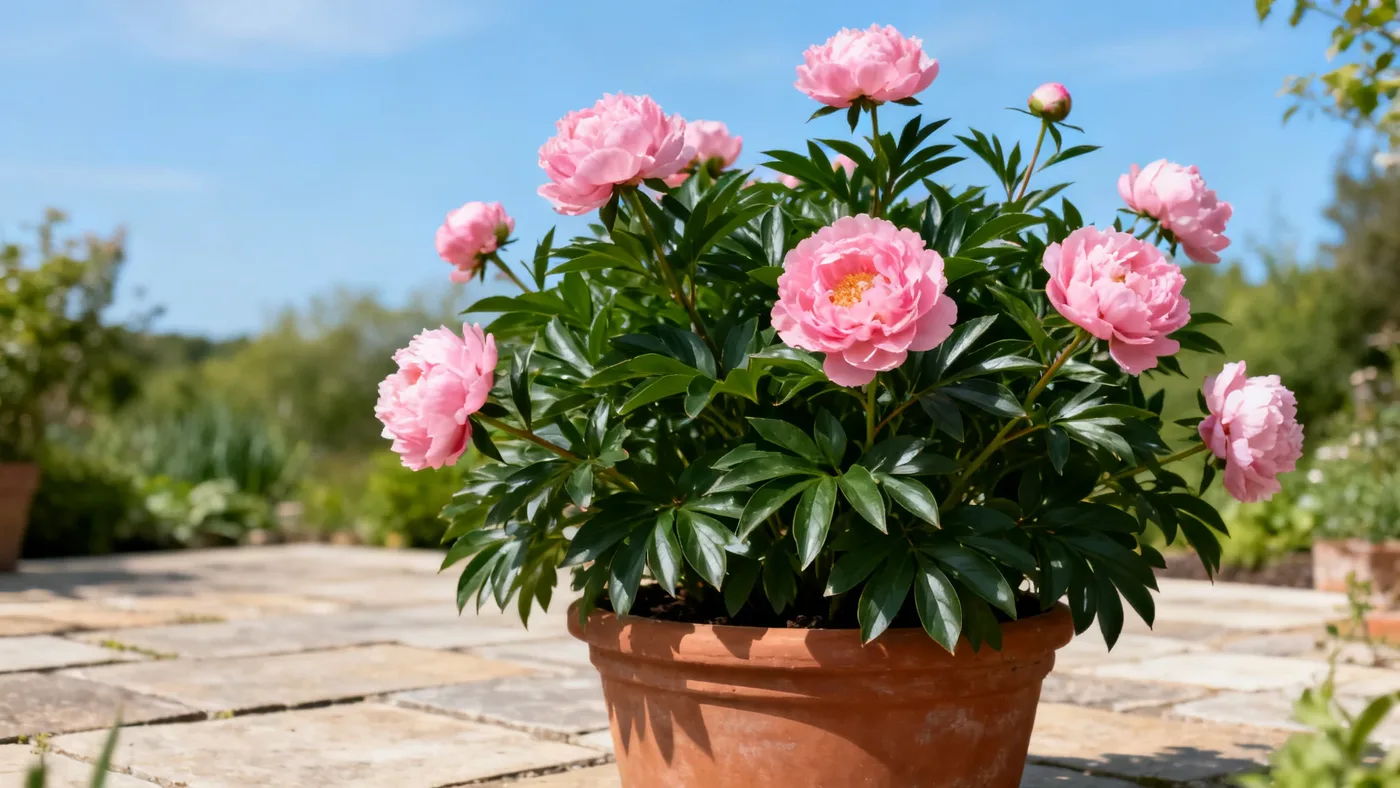
Growing Karl Rosenfield Peony in Containers and Pots
Can peonies grow in pots? Yes. Karl Rosenfield Peony, the striking deep-red herbaceous perennial, can bloom in a large, well-draining container. Keep in mind that it will generally perform better and live longer planted directly in the ground. If space, climate, or circumstance limits you to container growing, a careful setup can support blooms for several years.
Choosing the Right Container for Karl Rosenfield Peony
Karl Rosenfield Peony reaches 28 to 36 inches tall and spreads 24 to 36 inches wide over 3 to 4 growing seasons. A large container is essential: aim for one at least 18 to 24 inches deep and 18 to 20 inches in diameter. Decorative pots, fabric grow bags, and wooden planters all work, provided they have drainage holes in the base. Do not use cachepots without holes; water pooling around the roots invites the very problem peonies despise: soggy soil.
Material has modest impact. Ceramic and plastic retain moisture longer, which suits hot, dry climates. Terracotta dries faster and works well in cool, rainy regions. Avoid glazed or sealed ceramics that trap water at the bottom.
Soil Preparation for Container Peonies
Peonies are intolerant of waterlogged soil and require fertile, well-drained loam. Never use garden soil alone in a container. Start with a high-quality potting mix, then amend it: combine one part potting soil with one part coarse sand or perlite to boost drainage. Add a small amount of compost for nutrients. Aim for a soil pH of 6.5 to 7.0 (slightly acidic to neutral). If your water or amendments skew alkaline, check with your local extension service for adjustment strategies.
Fill the container loosely before planting. The crown, the point where roots meet shoots, should sit no more than 1 to 2 inches below the soil surface. Planting the crown too deep is a leading reason peonies fail to bloom, both in containers and in the ground.
Planting Your Karl Rosenfield Peony in a Container
Fall is the best time to plant Karl Rosenfield Peony, when bare-root divisions are available. Spring planting of container-grown nursery stock also works. Obtain a division with 3 to 5 eyes (small buds on the crown). Gently loosen the roots and spread them into the prepared soil. Firm the soil around the roots, leaving 1 to 2 inches of space between soil and pot rim for watering.
Water thoroughly after planting to settle the soil and eliminate air pockets. Be patient with blooming. Peonies may bloom lightly in the first year after planting, but typically take 2 to 3 years to reach full flowering potential. Container-grown peonies follow a similar timeline.
Watering and Drainage for Container Peonies
Watering is the most critical factor in container peony success. During active growth in spring and early summer, provide about 1 inch of water per week. Water when the top inch of soil feels dry to the touch; do not let the container dry out completely, but do not keep it perpetually wet. Press a finger into the soil to check.
Once established (after the first growing season), reduce frequency. In cooler months and after blooming, let the soil dry out more between waterings. Always empty any standing water in a saucer within 30 minutes of watering. Without proper drainage, the peony will eventually decline.
Sunlight and Container Location
Karl Rosenfield Peony requires full sun: 6 or more hours of direct sunlight daily. Container peonies are particularly vulnerable to reduced blooming in shade, so position the pot where it captures strong morning light. In hot southern regions (zones 7 and 8), light afternoon shade from 2 to 4 p.m. can prevent wilting on scorching days, but flowering will be reduced.
Move the container if your setup allows. In spring, place it in the sunniest spot. Later in summer, if afternoon heat is intense, relocate it to receive afternoon shade.
Feeding and Fertilizing Container Peonies
Nutrients leach from container soil faster than from garden beds. In early spring, as shoots emerge, apply a light application of a low-nitrogen, phosphorus-rich, or balanced fertilizer. Follow the label rate; excess nitrogen promotes foliage over blooms.
Repeat once more in late May or early June, just before or as buds begin to open. After mid-June, stop fertilizing. Feeding late in the season can trigger soft new growth that will not survive winter.
Supporting Stems During Bloom
Karl Rosenfield Peony produces large double blooms that weigh down stems, especially in containers where the plant's base is confined. Install a sturdy peony ring or three to four bamboo stakes around the plant in early spring, before stems shoot up. Loosely tie stems with soft twine as they grow. This step is especially important in pots, where flopping stems waste space and can crack under their own weight.
Pruning and Seasonal Care
After a hard frost kills the foliage in late fall, cut the plant down to a few inches above soil level. Remove all dead foliage and dispose of it; do not compost peony foliage, as disease spores can persist. This cleanup is especially critical in containers, where air circulation is limited and disease pressure can build.
In late winter (February or March), scratch a light application of balanced fertilizer into the top inch of soil to prepare for spring growth.
After petals drop, remove spent blooms. This redirects the plant's energy toward strengthening the crown and roots rather than seed production.
Common Container Growing Challenges
Botrytis Blight in Cool, Wet Springs
Container peonies are more prone to fungal issues because soil stays consistently moist. If you see brown, water-soaked spots on leaves or petals, improve airflow: move the pot away from walls and close plantings. Reduce overhead watering. Water at soil level, not on foliage. Remove affected leaves.
Ants on Unopened Buds
Ants often swarm unopened buds to feed on nectar. This is harmless and often beneficial; do not spray. Ants may even help protect buds from other pests.
Powdery Mildew
In humid conditions, a gray-white coating may appear on leaves. Ensure the pot receives full sun and has adequate air circulation. If severe, consult your local extension service for treatment options.
Failure to Bloom After Year 2
If your peony has been growing for 3 years without flowering, verify the crown depth (no more than 1 to 2 inches below soil), sunlight exposure (6+ hours daily), and whether you are overfeeding with nitrogen, which suppresses blooms.
Root-Knot Nematodes
This is rare in containers but possible if soil was not sterile. Affected plants show yellowing and stunting. If suspected, remove the plant and discard the soil.
Overwintering Your Container Peony
Karl Rosenfield Peony is hardy in USDA zones 3 through 8. In zones 3 to 5, container peonies can survive winter outdoors if soil and roots stay consistently frozen (freezing is protective; repeated freeze-thaw cycles damage roots). Wrap the pot in burlap in late fall, or mound leaves or straw around it once the ground freezes hard.
In zones 6 to 8, move the container to an unheated garage, shed, or cold frame where it stays dormant through winter. Before moving, stop watering and allow soil to dry. Resume normal watering in spring after moving the pot back outdoors.
When to Consider Moving to Ground
If your container-grown Karl Rosenfield Peony thrives, you may wish to transplant it to the garden after 3 to 4 years. Peonies live for decades when in-ground; container specimens have a shorter effective lifespan as roots eventually outgrow the pot and compaction limits blooming. Prepare a well-drained bed in full sun. Transplant in fall. For detailed in-ground guidance, see our guide to planting Karl Rosenfield Peony for years of blooms. For broader container and seasonal care, refer to the Karl Rosenfield Peony care guide.
Container Peony Quick Reference Checklist
| Task or Detail | Specification |
|---|---|
| Container size | Large, deep pot: minimum 18–24 inches deep and 18–20 inches wide, with drainage holes |
| Soil mix | Potting soil + 1 part sand or perlite + compost; pH 6.5–7.0 |
| Crown depth | 1–2 inches below soil surface (not deeper) |
| Planting season | Fall (bare-root); spring (container-grown stock) |
| Watering | ~1 inch per week during active growth; reduce when established |
| Soil moisture | Top inch dry between waterings; never soggy |
| Sunlight | 6+ hours direct sun daily; afternoon shade acceptable in zones 7–8 (reduces blooms) |
| Temperature zones | USDA zones 3–8 |
| Fertilizing | Early spring + late May/early June; low-nitrogen formula preferred |
| Support | Install peony ring or stakes in early spring |
| Pruning | Cut back to a few inches above soil after hard frost in late fall |
| Overwintering zones 3–5 | Wrap pot outdoors or mound with mulch |
| Overwintering zones 6–8 | Move to unheated garage or cold frame |
| Expected blooming timeline | May bloom lightly year 1; typically full blooms by years 2–3 |