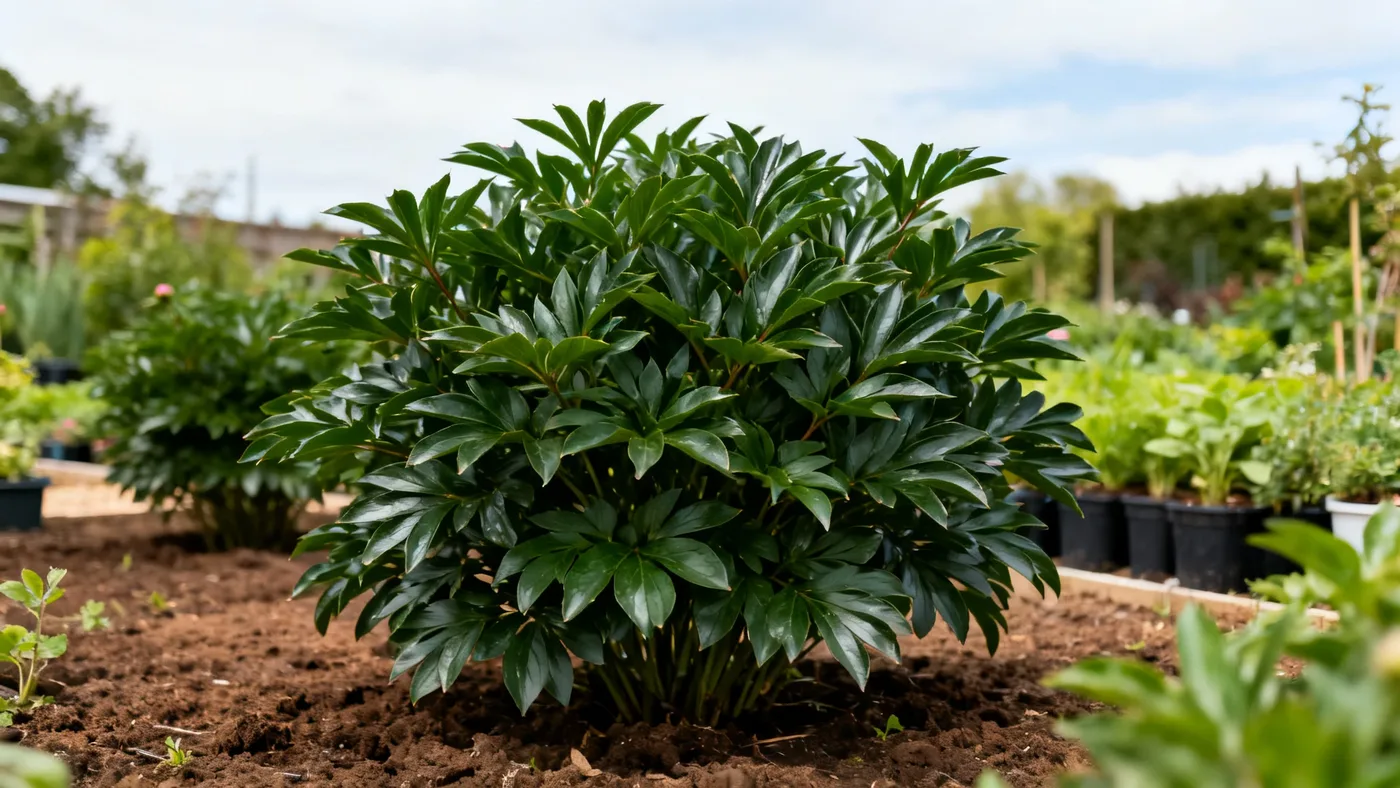
Is Karl Rosenfield Peony Deer and Rabbit Resistant?
Yes, Karl Rosenfield Peony has good deer resistance and is not a preferred browse for most white-tailed deer. While no plant is 100 percent deer-proof in all situations, peonies rank among the more reliable choices for gardeners managing deer pressure. This guide addresses common questions about how well Karl Rosenfield Peony stands up to deer and rabbit browsing, what to do in high-pressure wildlife areas, and how to keep pets safe around this plant.
Deer Resistance Basics
Is Karl Rosenfield Peony deer resistant?
Yes. Karl Rosenfield Peony has good resistance to deer browse and is not listed as a preferred food source for white-tailed deer. Deer typically walk past established peonies in favor of more palatable plants like hostas, tulips, and tender perennials. This resistance holds across the plant's mature form and is one reason peonies remain popular in suburban gardens where deer pressure is moderate to high.
Why don't deer eat peonies?
Peonies have thick, compound leaves with a tough texture and slightly unpalatable quality that deer find less appetizing than softer foliage. The plant's vigorous growth and dense canopy also make it less attractive as a browse target. Once a peony matures and establishes a strong root system, its sheer size and robustness make it an unappealing food choice compared to more tender, nutrient-rich plants.
What does "good deer resistance" mean for peonies?
"Good deer resistance" means that Karl Rosenfield Peony is seldom browsed and is not a preferred plant for deer in most garden settings. In extreme conditions such as severe winter food scarcity or very high deer density, even resistant plants may be nibbled. In typical suburban or rural settings with normal wildlife pressure, you can rely on Karl Rosenfield Peony to remain largely unharmed by deer.
Are all peony varieties equally deer resistant?
Most herbaceous peonies, including lactiflora cultivars like Karl Rosenfield, share the same basic deer resistance traits. Hybrid and botanical peony types also generally have good resistance. The key is that peonies as a class, rather than individual cultivars, are avoided by deer; you can safely plant any peony cultivar in a deer-prone area without worrying about the specific variety being more or less vulnerable.
What is the difference between "deer resistant" and "deer proof"?
Deer resistant means a plant is seldom browsed and not a preferred food, but may be nibbled under extreme conditions. Deer proof means a plant will never be eaten, which is extremely rare in horticulture. Karl Rosenfield Peony falls solidly in the deer resistant category and is reliable enough to plant with confidence, though it is not a guarantee against every possible wildlife scenario.
Rabbit Resistance
Are peonies rabbit resistant?
Yes, Karl Rosenfield Peony has good resistance to rabbit browsing, just as it does to deer. Rabbits typically prefer tender, low-growing plants like clover, lettuce, and young shoots and will generally leave peony foliage alone. The thick, mature leaves and woody stems of an established Karl Rosenfield Peony are not attractive to rabbits searching for food.
Will rabbits damage young peony shoots in spring?
Newly emerging peony shoots in spring are slightly more tender than mature foliage, but they are still not typically browsed by rabbits in a garden with adequate alternative food sources. A rabbit population facing food scarcity may sample unfamiliar plants, but this is rare with peonies. If rabbit damage occurs in spring, it is usually mild and does not set back the plant's growth or blooming potential for the season.
How does Karl Rosenfield Peony compare to other rabbit-resistant plants?
Peonies are among the most reliable rabbit-resistant perennials, comparable to ornamental alliums, salvias, and catmints in their resistance. Unlike some plants that rabbits may sample and find unpalatable, peonies are actively avoided from the start. Karl Rosenfield Peony is an excellent anchor plant in a rabbit-resistant border and can be confidently mixed with other species rabbits dislike.
Young Plants and Establishment
Are young peonies more vulnerable to deer than mature plants?
Young container-grown peonies or freshly planted divisions are not substantially more vulnerable to deer than mature plants, because even their soft new foliage is not particularly appetizing to deer. However, a newly planted peony in a pot or fresh in the ground may attract curiosity from deer during the establishment phase. Once the plant is in the ground and growing actively, it quickly becomes established enough to resist casual browsing.
How long does it take for a peony to become fully established against browsing?
Karl Rosenfield Peony reaches full mature size over about 3 to 4 growing seasons and develops peak deer resistance as it matures. In the first year after planting, the plant is establishing its root system; by the second year, significant above-ground growth is visible. By the third and fourth years, the clump reaches its mature height of 28 to 36 inches and full width of 24 to 36 inches, at which point deer resistance is at its peak.
Should I use tree guards or protective measures on young peonies?
Tree guards and protective mesh are not necessary for Karl Rosenfield Peony, even in its first year. The plant's natural resistance is evident from the start and does not require physical protection. Your effort is better spent protecting more vulnerable plants like tulips, hostas, and young shrubs that actually attract deer browsing.
Landscape Design and Wildlife Management
Should I fence my Karl Rosenfield Peonies?
Fencing is not necessary for Karl Rosenfield Peony unless you are in an area with extremely high deer density or are growing many highly palatable plants nearby. Peonies are reliably avoided by deer and do not justify the cost and aesthetic impact of protective fencing. Reserve fencing for vulnerable plants like tulips, hostas, and fruit trees; pair your peonies with fenced or protected areas to create layered defense.
What deer-resistant plants pair well with Karl Rosenfield Peony?
Karl Rosenfield Peony grows excellently alongside bearded iris, catmint (Nepeta), ornamental alliums, and salvias, all of which share its deer resistance. Roses can also be interplanted, though they require more diligent pest management. A mixed border of deer-resistant perennials creates a rich visual tapestry while reducing the temptation for deer to linger in the garden.
Can I use Karl Rosenfield Peony as a deer barrier plant?
Yes, Karl Rosenfield Peony can serve as part of a deer-resistant hedge or edge planting to discourage deer from entering more vulnerable sections of the garden. Its mature height of 28 to 36 inches and dense foliage make it useful as a visual boundary, though it is not a physical barrier. Pair peonies with thorny shrubs or space them densely along paths to maximize their deer-deterrent effect.
Does heavy deer pressure change how I should plant Karl Rosenfield Peony?
Even in areas with heavy deer pressure, Karl Rosenfield Peony follows standard planting guidelines: space plants 3 to 4 feet apart, position the crown eyes no more than 1 to 2 inches below the soil surface, and provide 6 or more hours of full sun. Deer pressure does not require special planting depth, spacing, or location adjustments; what matters is good drainage and adequate light for blooming.
How do I know if my garden has significant deer pressure?
Signs of deer pressure include browse lines on shrubs and trees (branches stripped to a clear height), damage to vulnerable plants like hostas and tulips, hoof prints in soft soil, and fresh deer droppings. If you see these signs, you have moderate to high deer pressure; Karl Rosenfield Peony can still thrive in this situation, but pair it with other resistant plants to reduce reliance on barriers or repellents.
Other Wildlife Interactions
What about the ants I see on peony buds?
Ants are commonly seen on unopened peony buds and are attracted to the nectar secretions on the outside of the bud. This interaction is harmless and often beneficial, as ants may help control other small pests. There is no need to wash off ants or treat the buds; they will disperse naturally once the flower opens.
Do other animals browse Karl Rosenfield Peony?
Groundhogs, marmots, and other herbivorous wildlife generally avoid peonies, though individual animals may sample plants out of curiosity. Squirrels do not browse the foliage and are primarily interested in nuts and bulbs rather than established perennials. In the vast majority of cases, wildlife other than deer and rabbits will leave your Karl Rosenfield Peony untouched.
Are peonies safe in a pasture with horses or livestock?
Peonies, including Karl Rosenfield, are listed as mildly toxic to horses and should not be planted in areas where horses have access to the foliage. Cattle and sheep are less commonly reported to browse peonies, but keeping livestock away from any ornamental plantings is standard management practice. If you manage livestock, confine peonies to fenced ornamental beds away from grazing areas.
Pet Safety and Toxicity
Is Karl Rosenfield Peony toxic to dogs?
Yes, Karl Rosenfield Peony is mildly toxic to dogs. The ASPCA lists Paeonia species as toxic to dogs, typically causing vomiting, diarrhea, or lethargy if ingested in significant quantity. While most dogs are not attracted to the thick, bitter foliage and will spit it out, it is wise to position the plant where curious puppies or dogs with a habit of chewing ornamentals cannot easily access it.
What happens if my cat eats peony leaves?
Cats can also be affected by the mild toxins in peony foliage, though cats are typically less likely than dogs to chew on garden plants. If a cat ingests peony material, it may experience vomiting, diarrhea, or lethargy. Since cats are naturally less interested in fibrous, unpalatable foliage, actual poisonings from peonies are rare; however, if your pet has a history of eating plants, provide a barrier or choose an alternative location.
Are peonies poisonous to horses?
Yes, peonies are mildly toxic to horses and should be kept out of pastures and areas where horses graze. Horses are less likely to eat peony foliage than they are to browse on grass and clover, but the plant is documented as toxic to equines. Keep ornamental peonies in fenced ornamental gardens separate from horse pastures.
Confidence in Your Garden
Can I grow Karl Rosenfield Peony without worrying about deer?
In most suburban and rural gardens, yes, you can plant Karl Rosenfield Peony and expect it to thrive without deer damage or need for protective measures. The plant's good resistance means it will be safe in typical wildlife settings. Focus your protection efforts on more vulnerable plants, and use peonies as a backbone planting you can count on.
Should I apply deer repellents to Karl Rosenfield Peony?
Applying deer repellents to Karl Rosenfield Peony is unnecessary and adds cost and maintenance without clear benefit. Repellents work best on plants that deer find moderately attractive but are actively avoiding; peonies are not attractive enough to warrant the extra effort. Reserve repellents for highly vulnerable plants like roses and ornamental trees.
Why are peonies often recommended for deer-prone gardens?
Peonies are recommended for deer-prone gardens because they combine reliable resistance, long-term persistence (50+ years in the ground), early summer blooming, and striking cut-flower value with virtually zero maintenance or protective measures. No fencing, no repellents, no special care is needed. Once established, a peony becomes a predictable, low-maintenance anchor that gardeners can depend on through decades of changing wildlife populations and seasonal variations.
Quick Reference: Karl Rosenfield Peony and Wildlife Resistance
| Wildlife / Concern | Resistance Level | Notes |
|---|---|---|
| Deer browsing | Good | Not a preferred browse; safe in typical wildlife pressure |
| Rabbit browsing | Good | Tough foliage unappealing to rabbits |
| Groundhog / marmot browsing | Good | Generally avoided; rarely a concern |
| Ants on buds | Harmless | Normal behavior; beneficial; no treatment needed |
| Dog toxicity | Mildly toxic | Keep away from dogs prone to chewing plants |
| Cat toxicity | Mildly toxic | Rare issue; cats avoid foliage naturally |
| Horse toxicity | Mildly toxic | Keep out of horse pastures |
| Fencing requirement | Not required | No protective fencing needed in typical gardens |
| Repellent application | Not necessary | Skip repellents; plant with confidence |
| Mature height and width | 28-36 in tall, 24-36 in wide | Reaches full size in 3-4 growing seasons |
| Recommended spacing | 3-4 ft apart | Allows room for mature clump development |
| Crown planting depth | 1-2 in below surface | Shallow planting; depth errors are the top cause of no blooms |
For detailed growing information, see our Karl Rosenfield Peony Care Guide.