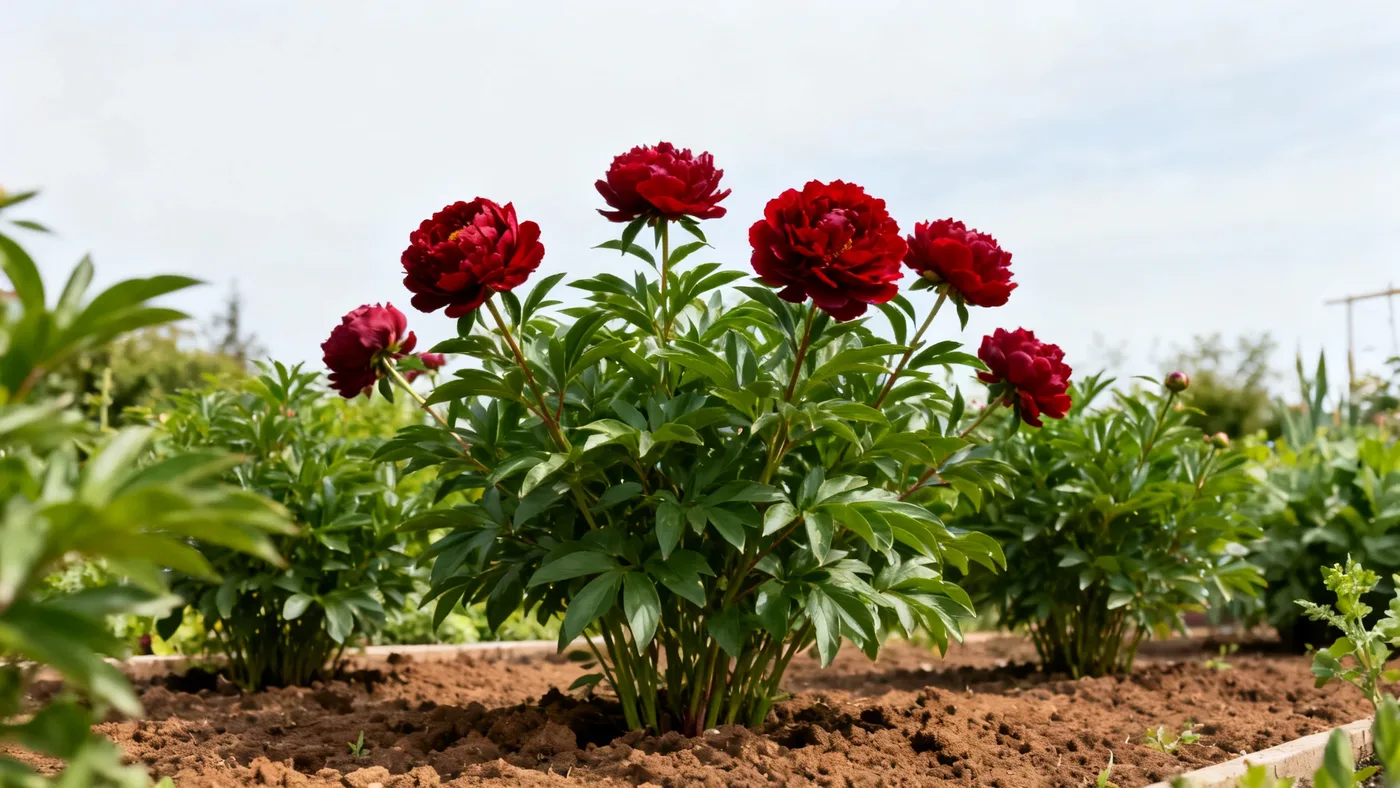
Karl Rosenfield Peony Fall Color and Autumn Foliage
Late September and October bring a change across most gardens. Roses fade, summer perennials look tired, and you're left wondering what to expect from the plants that dazzled you months ago. Your Karl Rosenfield Peonies are no exception. Right now, if you walk past your plants, you'll notice the glossy dark green foliage that dominated the garden all summer is beginning to shift. The leaves are losing vigor. The color is moving from vibrant green toward something warmer and earthier. This is the beginning of the peony's fall color display, and understanding what to expect will help you decide whether to admire it or cut it back.
Karl Rosenfield Peonies are herbaceous perennials, meaning they live their entire life above ground for one growing season, then retreat underground to rest. That cycle includes a color change in fall. Unlike evergreen shrubs or trees that hold their foliage through winter, peonies are programmed to fade and die back. That transition is worth watching. It tells you something is working the way it should.
What Color Change to Expect
Karl Rosenfield Peony foliage will shift toward bronze and burgundy tones as autumn progresses. This is not a rot or disease. It is not a nutrient deficiency. It is the plant's normal response to cooling temperatures and shorter days. The deeply divided compound leaves that looked so fresh in June begin to lose chlorophyll. Bronze and burgundy pigments emerge underneath, a bit like watching a green apple turn red as it ripens.
The intensity of this fall color varies by zone and local growing conditions. In zones 3 and 4, where temperatures drop hard and fast, the color shift may happen over just a few weeks. In zone 8, where autumn is slower and milder, the color change can be subtle. You might see mostly yellowing leaves with only hints of bronze at the edges. In zones 5, 6, and 7, the shift is usually more pronounced. The leaves turn a rich bronze or deep burgundy before they yellow and drop.
The color never includes red or crimson tones like the flowers do. Think of it as a warm, earthy bronze or mahogany brown, not a bright fall red. Some gardeners find it attractive. Others see it as the plant's signal that the growing season is over and it's time to clean up.
Timeline for Fall Color Changes
The Karl Rosenfield Peony's color progression follows a predictable path in most growing regions. Use this timeline to know what to expect.
- Mid-September to early October: Foliage begins to yellow at the leaf edges and tips. The overall plant still looks fairly green, but the glossy quality fades. You might notice the lower leaves (closest to the ground) discolor first.
- Late October to early November: Bronze and burgundy tones become visible throughout the plant. Leaves may still be mostly green at their centers, but the edges are clearly bronze or brown. The plant looks tired rather than vibrant.
- November to early December: The plant yellows significantly. All remaining green is gone. Bronze and burgundy tones dominate. After a hard frost, leaves may wilt rapidly and drop within days.
- Late December onward: The plant dies back to the ground. Above-ground foliage is largely gone. Stems may still be visible, depending on whether you've cut them or left them standing.
In zones 3 and 4, the hard frost that triggers rapid die-back typically arrives in mid-to-late November. In zones 7 and 8, this may not happen until December or even January. Your local first frost date is a good guide. The fall color show usually begins 4 to 6 weeks before that date.
Fall Color as a Care Indicator
The foliage change tells you something important about the plant's health. A Karl Rosenfield Peony that follows the normal color progression, yellowing and browning over several weeks, is functioning normally. The plant is moving resources from the leaves down into the root system for storage over winter and energy for next spring's growth.
If the foliage turns dark or blackens suddenly, or if you see spots or patches of dead tissue on the leaves, that may signal a fungal disease such as Botrytis blight or leaf spot. These are different from the normal fall color change and warrant attention. Healthy fall color happens gradually. Disease-driven damage happens fast and often shows patterns.
Also watch for ants on the foliage as it fades. This is common and harmless. Ants feed on nectar and honeydew but do not harm the plant. You do not need to treat them.
When to Cut Back
The question most gardeners ask in autumn is: should I remove the foliage now, or wait? The answer depends on your zone and your preference. The best time to cut foliage back to a few inches above ground is after it yellows and dies back with hard frost in late fall. In zones 3 through 6, this typically means mid-November through December. In zones 7 and 8, you can wait until January.
Some gardeners cut early to tidy the garden. Others leave the dried stems standing through winter for structural interest or to protect the crown of the plant from frost heave. Both approaches work. If you leave stems standing, cut them back in very early spring, before new shoots emerge (usually late February or early March in zones 5 and 6).
Do not cut foliage while it is still green or mostly green. Removing healthy leaves stops the plant's ability to send resources down to the roots. Wait for the foliage to yellow or die back first. This takes patience, but it ensures the plant stores enough energy to bloom reliably next year.
Fall Color and Next Year's Bloom
The strength of the fall color change does not predict next year's bloom. A plant with muted or subtle bronze tones will still flower as well as one with a bold fall color display. The appearance of the foliage is mainly aesthetic. What matters more is the timing of the cut-back. Peonies planted properly (with the crown 1 to 2 inches below soil surface) will flower reliably whether you admire their autumn foliage or cut it back as soon as it yellows.
If your Karl Rosenfield is still not blooming heavily after 2 to 3 years, the fall color change will not fix it. Check your Karl Rosenfield Peony care guide for planting depth and other factors that affect bloom.
Seasonal Tips for Fall
- Monitor for disease: If foliage shows spots or blackens suddenly, prune affected stems and clean up dropped leaves. Do not compost diseased foliage.
- Stop deadheading: Remove spent flowers in summer, but once you see fall color changes beginning, stop. Let the plant complete its cycle.
- Do not fertilize: Cease fertilizing by late summer. Feeding now encourages new tender growth, which will be damaged by frost and wastes the plant's energy.
- Water during dry falls: If autumn is dry, water deeply once or twice before the first hard frost. Established peonies are drought tolerant, but good hydration before dormancy supports winter survival.
- Check crown drainage: Before the ground freezes, confirm water does not puddle around the crown of the plant. Poor drainage can rot the root system over winter.
Quick Reference: Karl Rosenfield Fall Foliage Care
| Timing | What to Expect | What to Do |
|---|---|---|
| Mid-September to October | Foliage yellows at edges; plant looks tired | Observe. Stop deadheading. Reduce watering if rain is adequate. |
| Late October to November | Bronze and burgundy tones emerge; majority of green fades | Continue to observe. Check for disease. Do not fertilize. |
| After first hard frost | Foliage dies back rapidly; plant drops leaves | Cut stems to 2-3 inches above ground, or leave standing until spring. |
| Late winter (Feb-Mar) | New shoots emerge from crown | If stems are still standing, cut them back now. Remove any mulch piled on the crown. |