What Does a Karl Rosenfield Peony Look Like? Buds, Leaves and Blooms
Walk a spring bed at knee height and you will find it: a small, dark red knob pushing out of cold soil, no bigger than your thumb. This season, down our rows, we noticed how many customers could not say what that knob would become. Knowing what a Karl Rosenfield looks like at each stage matters because a peony that stalls costs you a whole year of waiting, and the stall nearly always shows in the plant's appearance first.
Read on for how the buds, leaves, stems and blooms should look, what each off-looking sign points to, and the adjustment that fixes it. Each section starts with what you see and works back to the cause.
Egg-Shaped Crimson Buds You Spot in Spring
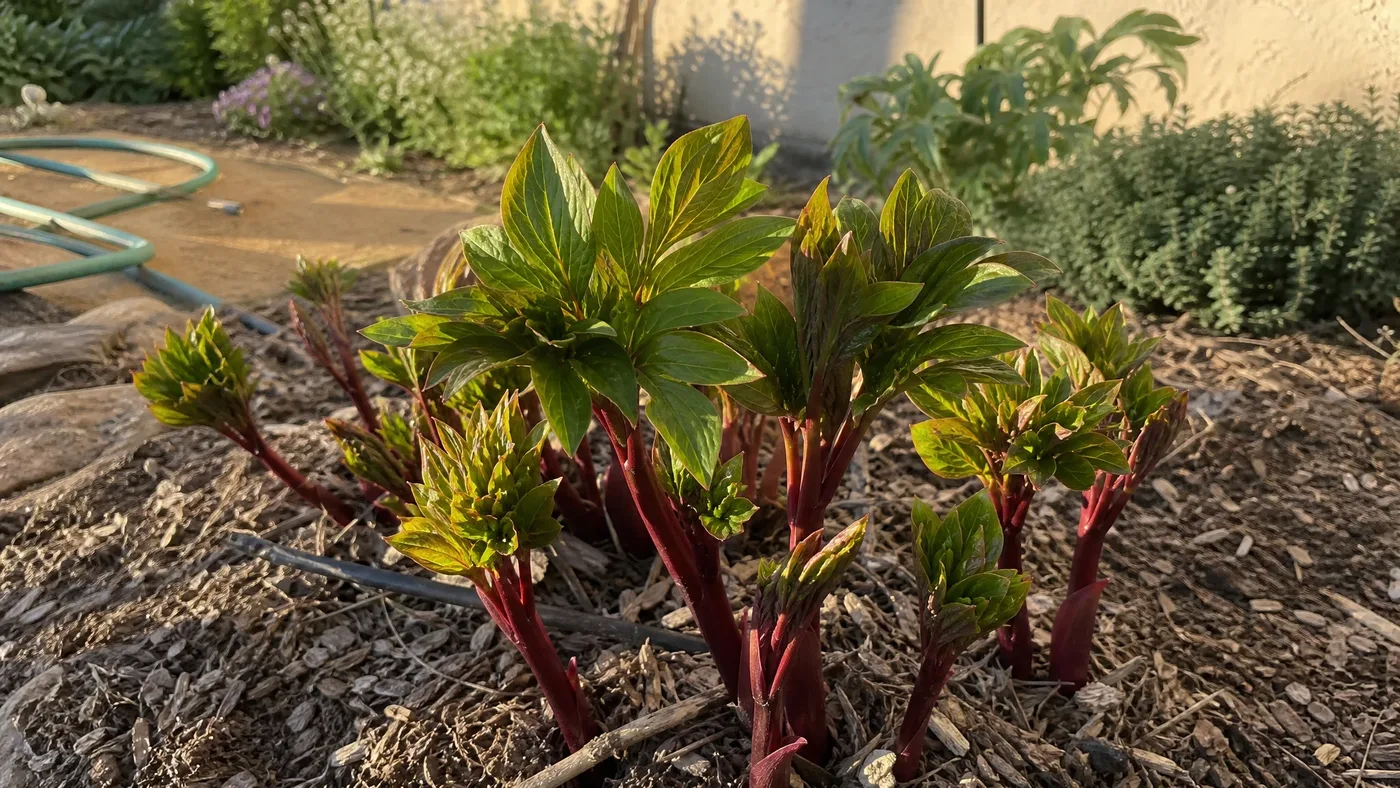
Crouch beside the clump in early spring and count the shoots. Each one rises as a dark red, pointed knob, firm to a light touch, and the red slowly turns green as the stem lengthens and the leaves unfold. That red is normal for Karl Rosenfield and for herbaceous peonies generally, so do not mistake it for frost injury or disease. A healthy start looks plump and upright, with a clean, firm base.
The flower buds come later, at the tops of the stems. They begin as small green-red balls, swell into egg-shaped buds, and show deep crimson at the tip as they fatten. Illinois Extension lists bloom for May to June, but your own calendar shifts with your zone, so check with your local extension service for the usual window where you garden.
A Spring Start Checklist
Run through these checks once a week while the shoots are coming up, and write down what you find.
- Count the shoots and note how many are thick versus thin. A young division sends up only a few thin ones, and that is the correct picture for a new plant.
- Press the base of a shoot gently. It should feel firm, not soft, and there should be no gray fuzz on the tips.
- Look at the color. Dark red to bronze on emerging shoots is healthy, while black, shriveled tips point to a hard freeze after emergence.
- Check the spacing. Peonies do best planted 3 to 4 feet apart, and crowded shoots stay damp and weak.
Glossy Compound Leaves on Karl Rosenfield Peony
Before we get into the details, we walk through what a healthy Karl Rosenfield leaf looks like, so you know what to compare against. Then we cover the warning signs, from dull or pale color to limp stems, and what each one tells you about light, water and drainage.
What Healthy Foliage Looks Like
Karl Rosenfield is a clump-forming perennial with divided, dark-green leaves. Each leaf splits into broad leaflets, and the surface has a polished sheen that catches the light. New growth often carries a bronze-red cast that fades to deep green within a couple of weeks. This is the leaf you should compare against when a friend hands you a division or a nursery tag looks doubtful.
The foliage is deciduous, so it dies down every autumn and returns from the same crown the next spring. Between those two points the clump should look full, rounded and dark, with leaves held out level rather than drooping.
When Leaves Turn Dull or Limp
Dull, pale green leaves usually mean too little light. Full sun means 6 or more hours of direct sun, and a clump that gets less will lose that glossy sheen first and then its bloom. Move it only if shade is the clear cause, and do it in fall while the plant is dormant.
Limp leaves need a closer look. If the soil is dry a few inches down, water deeply and the leaves will recover by evening. If the soil is wet and the leaves still sag, drainage is the problem, since peonies need moist but well-drained ground. If stems wilt and collapse from the base, treat it as disease, which we cover below.
Red-Tinged Stems That Lean or Hold Firm
A well-grown Karl Rosenfield carries stiff, upright stems with a reddish flush, strongest low down and near the buds. The flush is a good sign. Pale, thin or stretched stems are the warning, and they nearly always trace back to shade, crowding or a young crown that has not built reserves yet. A mature clump holds its shape, and our guide on how big Karl Rosenfield gets and how fast sets realistic expectations.
Even sturdy stems have a limit. This is a double with a heavy flower head, and the plant may need support. Rain turns each bloom into a sponge, and a stem that stood perfectly straight in the morning can be on the ground by evening.
Fixing a Leaning Clump
Our advice is to put the support in early, while the shoots are about knee high and the leaves are still folding open. A ring or grow-through grid set low lets the foliage cover it, so you never see the hardware. Staking after the lean has started bends stems at the break point, and a bent peony stem rarely recovers. If lean shows up in a mature clump that has always stood on its own, look for new shade from a tree that has grown or a shrub that has filled in.
Karl Rosenfield Peony Buds That Never Open
You see a bud the size of a marble, firm and crimson for a while, and then it stalls, browns and dries to a papery lump. Several causes produce this, and the order you check them in saves time. One of the most common questions we get is why a plant with healthy leaves keeps losing its buds, and the answer is usually one of the first three below.
- Planting depth. If the crown sits too deep, the plant grows leaves and little else. Pull back the soil and compare against the depth in our planting guide.
- Shade. Under 6 hours of direct sun, buds form small and then abort.
- Frost on swelling buds. A late freeze turns buds brown and soft. Cover the clump with a sheet on the nights it threatens, and remove it in the morning.
- Drought during bud swell. A dry spell in the weeks the buds fatten can stall them, so water deeply when rain is short.
- Immaturity. A young plant may drop its first buds while it builds roots. That is a plant working, not failing.
If none of these fits, our guide on why a Karl Rosenfield peony is not blooming goes through the rest of the list. Fix one thing at a time, then give the plant a full season to answer. Changing three things together leaves you guessing which one worked.
Blooms Paler or Flatter Than Expected on Karl Rosenfield Peony
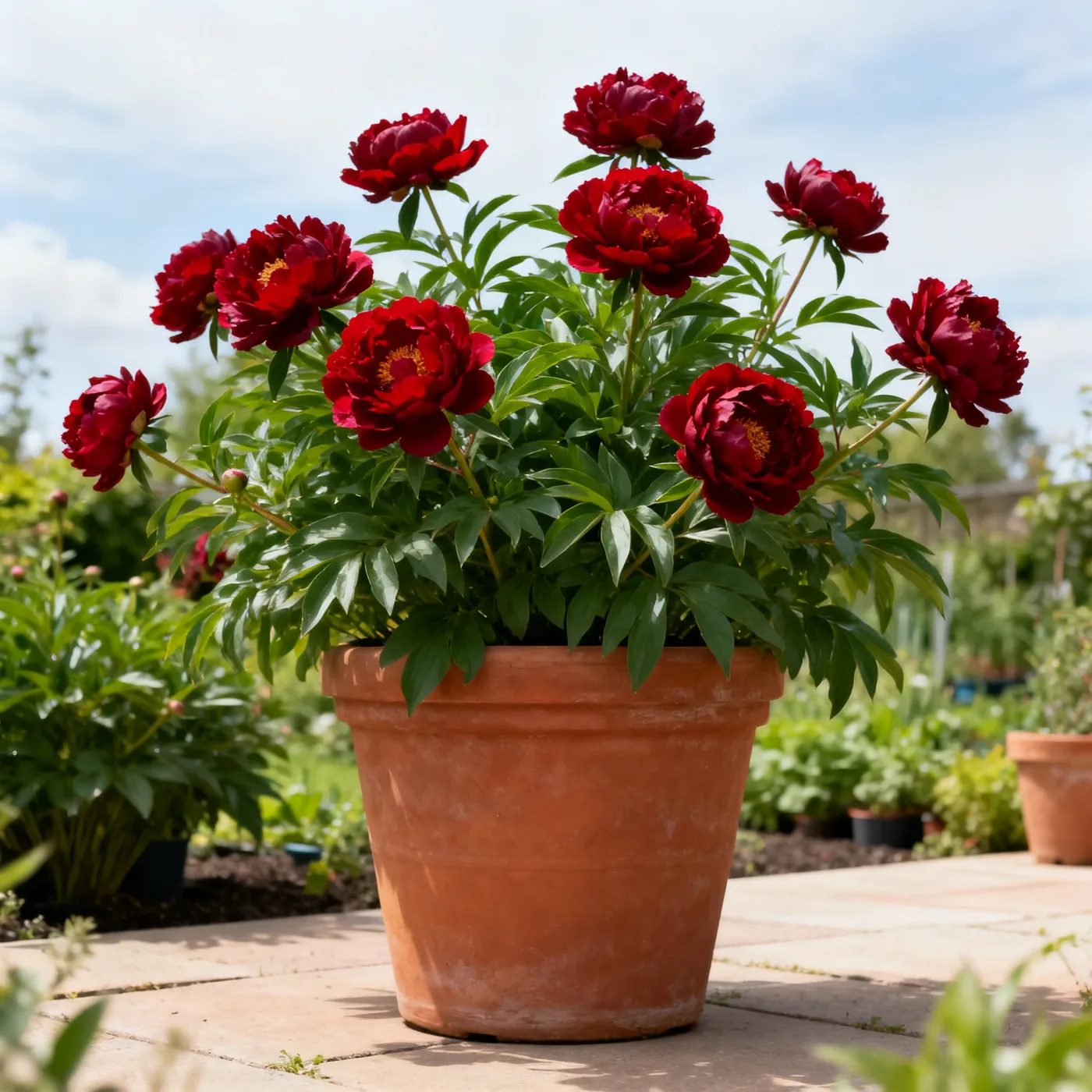
The target is a dense double, crimson red and fragrant, up to about 6 inches across, with petals packed into a rounded dome. As the flower ages, the crimson softens toward a rosy shade, which is the cultivar behaving normally. If you are comparing a bloom to a photo, check its age first. A flower on its third or fourth day will always look paler than one just opened.
Heat and Light
Hot weather pushes blooms open fast and fades them quickly, so a warm week can leave you with pale, short-lived flowers. Some advice says to move peonies into afternoon shade to protect the color. We would keep the plant in full sun, because shade costs you buds, and instead cut blooms when they are soft like a marshmallow and bring them indoors, where they hold their color longer. Our page on bloom time, color and how long it lasts covers the timing in more detail.
Young Plants Open Looser
A first or second flowering often looks looser or flatter than the photographs, with a visible center. This tends to improve as the clump matures. Do not judge the cultivar by its first flower. Judge it by the third or fourth spring, when the crown has had time to build.
Leaf Spots, Browning and Late Tatters
Not every mark on a leaf is a disease. Some are the plant's normal calendar, and some are the first sign of a fungal problem that will spread if left alone. Peony leaf blotch and peony wilt are among the troubles of this cultivar. The table below sorts what you see into its likely cause and the response.
| What you see | Likely cause | What to do |
|---|---|---|
| Purple-brown blotches on leaves in early summer | Leaf blotch | Remove affected leaves, keep water off the foliage, and clear debris in autumn |
| Shoots or stems wilt and collapse from the base | Peony wilt | Cut the stems at ground level and discard them, not in compost |
| Brown, crisp leaf edges during a hot dry spell | Heat and drought stress | Water deeply and mulch the root zone |
| Ragged, yellow or browning foliage in autumn | Normal dieback | Leave it until the leaves have died down, then cut back |
That last row catches many people. Cut the plant back after the foliage has died down in autumn, because tatters in that season are the plant finishing its year. Our guide to pruning Karl Rosenfield gives the cut. For anything more serious, see the pests, diseases and problems page.
Reading Karl Rosenfield Peony Across the Years
We think of this plant as a budget of patience. You spend it early and collect it over decades, and knowing what each stage should look like keeps you from judging the plant at the wrong price.
The Quiet Start
In the first year expect a few thin, red-flushed shoots, small leaves and probably no flowers. If it comes back after winter and puts up healthy leaves, it has done everything asked of it. Skip any urge to dig it up and check on it.
The Filling-Out Stage
By the third spring the clump should be visibly fuller, with more shoots, sturdier stems and darker, glossier leaves. Flowers are likely, though they may be fewer and looser than the best photographs. This is also when staking starts to matter, because the heads are heavier than the stems you saw at the start.
The Settled Clump
A decade-old clump should stand as a rounded mound of dark foliage and carry dense, crimson doubles that arrive on time each late spring. The look is settled, and the changes from one spring to the next are small. If a mature plant starts to look worse rather than better, suspect shade, crowding or a disease problem before you blame age.
A Karl Rosenfield Peony Worth the Wait
Judge the plant by what is in front of you: red shoots in spring, glossy dark leaves, firm stems and a dense crimson double that softens to rose. Each departure from that picture has a cause you can name, and most come down to light, depth, support or the plant's age. Make one change at a time and give it a season.
A photo record turns memory into evidence. Each spring, take the same set of pictures from the same spot so you can compare years side by side.
- The emerging shoots in early spring, with your hand or a ruler in the frame for scale.
- One fully open leaf, held flat against a plain background.
- The whole clump at knee height, showing the stems and any support.
- A bud a few days before it opens, and then the bloom from above and from the side.
- The clump in autumn just before you cut it back.
Karl Rosenfield Peony
Nursery-grown Karl Rosenfield Peony in sizes from 2 Gallon, shipped to your door.
From $62.95
Shop Now →Karl Rosenfield settles in on our farms where the sun is full and the soil is deep and rich in humus, with each crown set shallow and a little room kept between clumps. Our own small business grows every top-quality plant we offer, so we like knowing those red shoots and crimson doubles you have been studying began with us. Take a look at our peonies and bring home a Karl Rosenfield to watch through its seasons.